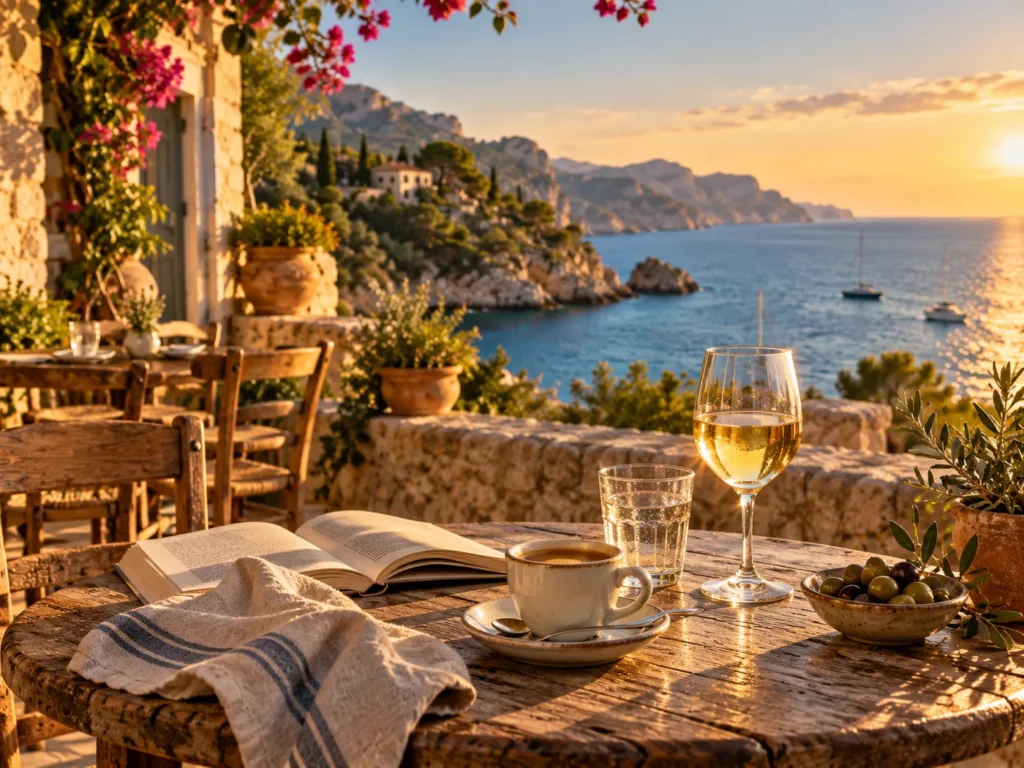
Many visitors arrive in Spain expecting beautiful beaches, famous museums and good weather.
What they rarely expect is how social everyday life feels.
Cities remain alive late into the evening. Children still play outside at night. Long lunches naturally become dinners. Conversations seem to matter more than schedules.
For many visitors, the biggest surprise is not Spain’s monuments or landscapes, but the feeling that people still make time for each other.
In a world that often feels rushed, Spain can feel surprisingly human.
Discovering the hours between landmarks
A first visit often begins with a list: a museum, a cathedral, a famous market. Those places offer useful starting points. The hours between them can reveal another country. A bakery opening its shutters, friends standing at a bar or neighbors stopping for a conversation make a city easier to understand.
Travel becomes more rewarding when those ordinary scenes have room in the itinerary. Walk the same street twice. Return to a café because you liked it. Learn a few words for greeting the people you meet. Familiarity can grow from very small repetitions.
Later evenings, different expectations
Some visitors are surprised to find families outside at hours when they would expect the streets at home to be quieter. In warm weather, a plaza can serve as an outdoor meeting place. Children play while adults talk nearby, though the atmosphere changes with the neighborhood, the season and the day of the week.
There is no single Spanish timetable. Large cities, coastal towns and small inland villages have different rhythms. Businesses set their own opening hours, and a closed door does not necessarily mean a shop is taking a traditional siesta. Reading posted hours and asking locally is more useful than relying on a national stereotype.
Food as a social setting
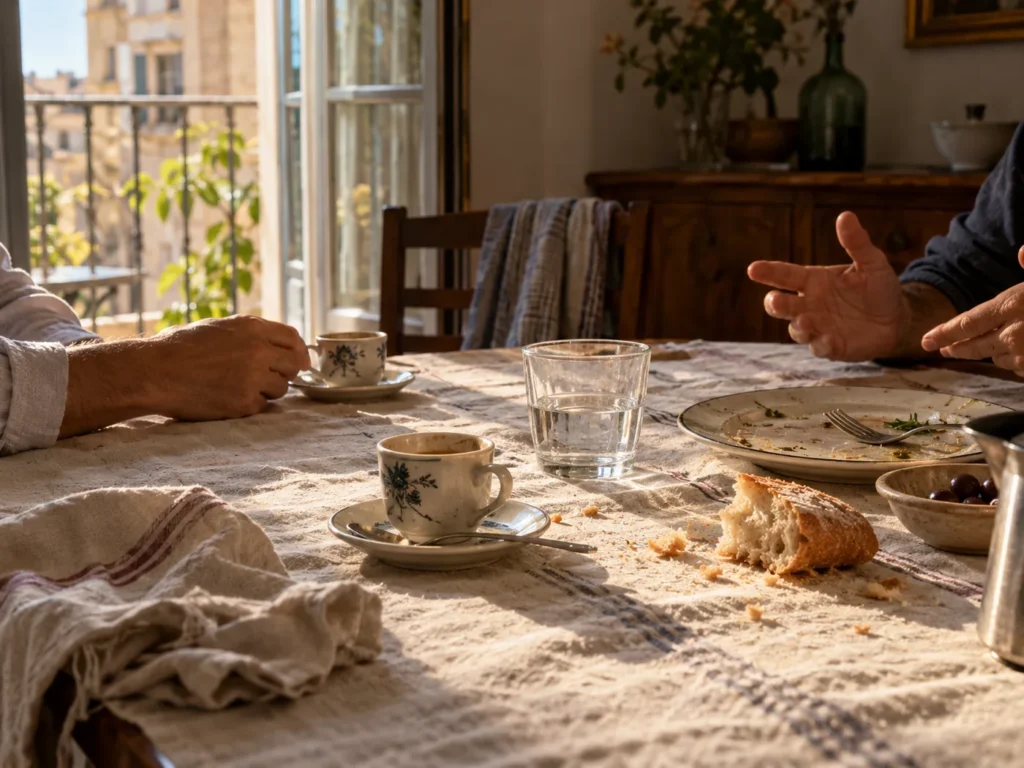
A bar may be a place for a coffee, breakfast or a brief conversation rather than an evening devoted to drinking. A meal can also extend into sobremesa, the conversation after the food has been cleared. These settings help explain why visitors remember the feeling of daily life as much as a particular dish.
Food differs greatly between regions. The Atlantic table of Galicia, the cooking of the Basque Country and Mediterranean kitchens should not be treated as interchangeable. Curiosity about those differences leads beyond the familiar images of paella and tapas.
The second visit to the same café
The first time you enter a café, almost everything demands a decision. Where should you stand? Is that table available? Will somebody come over? You study the room while trying to look as though you have been doing this all your life. Travel supplies many small opportunities to become a beginner again.
On the second visit, one difficulty has disappeared. You know where the counter is and what you enjoyed yesterday. There may be recognition, or there may simply be a familiar corner. Neither requires an instant friendship with the person making your coffee. Repetition itself changes the feeling of a place.
A traveler often searches for the exceptional experience while overlooking this quieter one: a little less uncertainty, a little more ease. A modest routine can become a doorway into a neighborhood. You begin to notice the people arriving for work, the delivery outside and the difference between a weekday morning and a free afternoon. The café remains an ordinary business. Your way of seeing it has acquired another layer.
A country that changes between sentences
The idea of discovering the real Spain can become troublesome if it suggests there is only one correct version. A fishing town and a residential street in Madrid are both real. So are a crowded beach, a village with shuttered houses and a neighborhood where families have arrived from other countries. A place does not lose its legitimacy because it fails to match a traveler’s preferred image.
Language can make those differences visible. You may hear Spanish alongside other languages in the same journey. Names on signs, ways of greeting and the words used around a table can carry local identity. Listening with curiosity is more useful than treating unfamiliar speech as an inconvenience to be solved immediately.
For a reader arriving from anywhere in the world, that variety matters. There is no universal foreign visitor against whom Spain can be measured. What seems surprising to one traveler may feel familiar to another. The most interesting question is therefore personal: which small detail has made you reconsider something you normally take for granted?
The pleasure of not understanding everything
There will be moments when a joke passes too quickly or a conversation seems to begin halfway through a story. Travel does not give immediate access to the inner life of a place. Accepting that can be a relief. You are allowed to enjoy an evening without becoming an expert by the end of it.
A few considerate habits carry a visitor a long way. Greet people, ask before photographing them and let a busy worker finish the task in front of them. When uncertain, a polite question is usually more useful than a confident assumption. Curiosity works best when it leaves the other person free to answer briefly or not at all.
Some encounters will remain anonymous. A helpful gesture, a seat offered, a recommendation made in passing: none needs to become a dramatic story about transformation. Their value may be precisely that they were small. Later, when the famous monument has merged with all the photographs you have seen of it, you may still remember the kindness that had no itinerary attached.
Looking without idealizing
Spain has rushed commuters, demanding jobs and lonely people too. A visitor sees a small part of someone else’s daily life, often while enjoying time away from work. Recognizing that limit makes the pleasures you notice more credible.
The discovery worth taking home is modest: shared spaces, conversation and ordinary routines can make a place feel welcoming. They are easier to notice when every hour has not already been assigned to the next attraction.