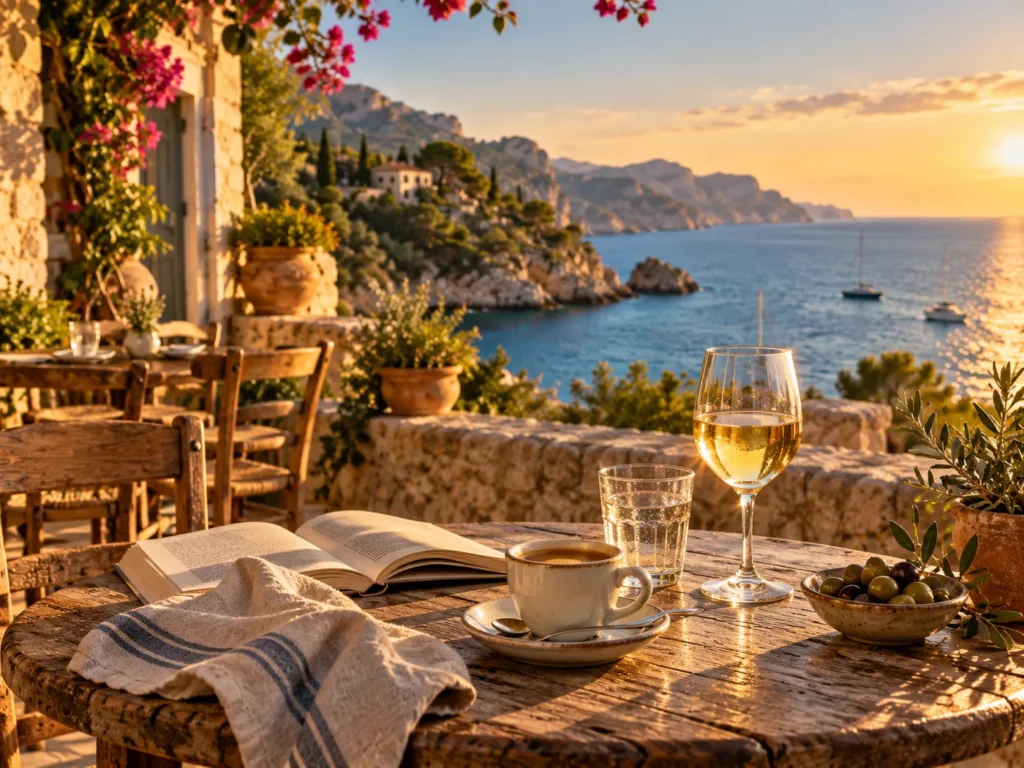
Spain teaches you something unusual very quickly:
lunch is rarely just about food.
In many parts of the country, especially on weekends, meals stretch naturally into long conversations, extra glasses of wine and unhurried afternoons. What surprises many visitors is not only the food itself, but the rhythm surrounding it.
People stay. They talk. Children keep playing around the table. Nobody seems obsessed with checking the time every five minutes.
In Spain, lunch often feels less like a scheduled activity and more like a small celebration of everyday life.
The meal and the time around it
A long lunch has several beginnings. There is the cooking, the laying of the table, the decision to open another bottle. Then there is the moment when everyone sits down and the practical work gives way to conversation. On a free afternoon, the meal can become the center of the day rather than something fitted between other activities.
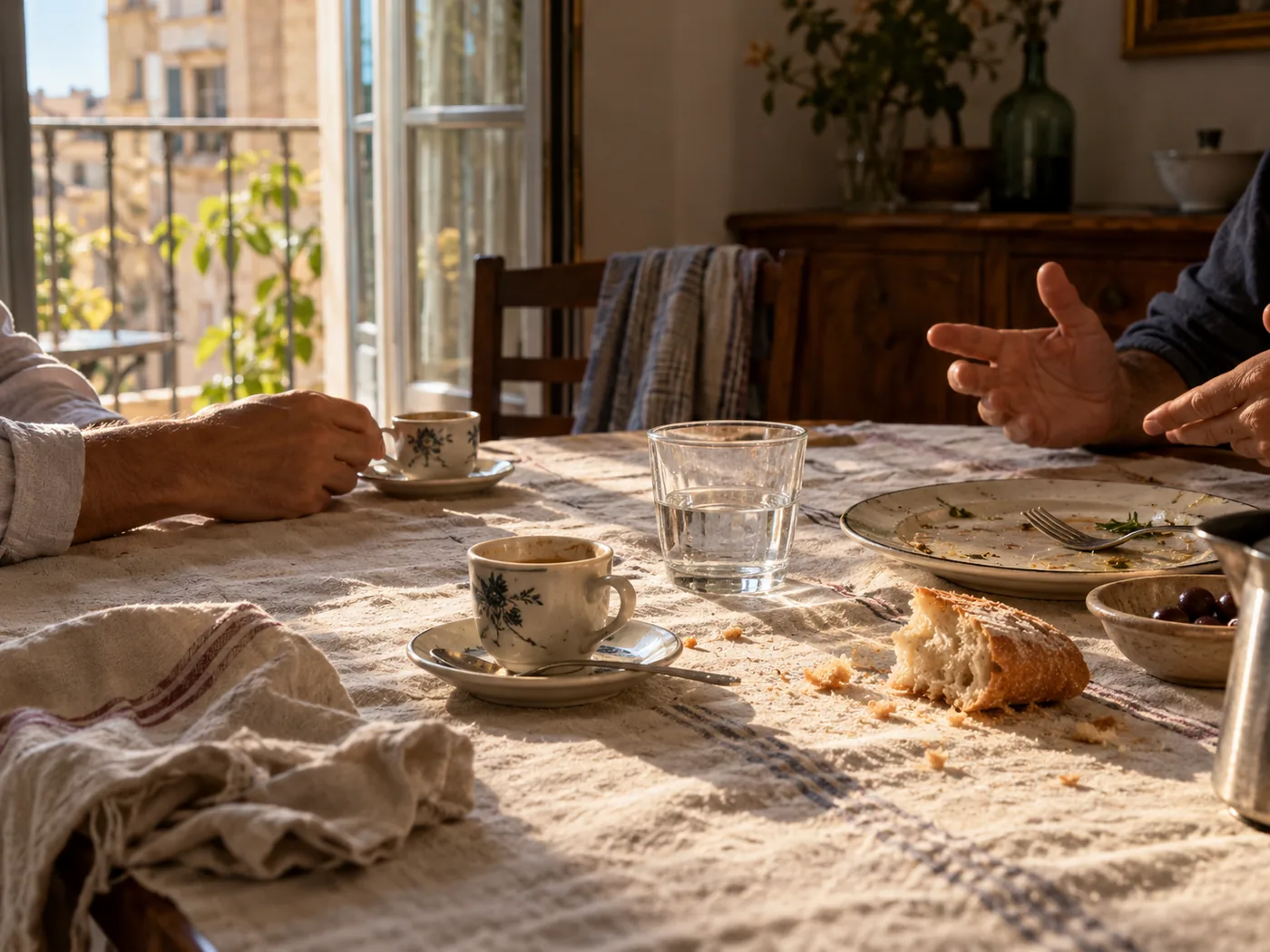
The Spanish word sobremesa describes the time spent at the table after eating. Plates may have disappeared while the conversation continues. Coffee arrives, a story is repeated, somebody asks a question that leads somewhere unexpected. The value lies in the company and the permission to stay.
Everyday lunches have another rhythm
The title is an invitation to look at a familiar custom, rather than a rule about every Spanish person. Workdays, school pickups and tight budgets also shape lunch. A quick sandwich and a hurried return to the office belong to contemporary Spain just as much as an extended family gathering does.
That contrast matters. The unhurried meal is especially noticeable when people can make room for it: a weekend, a celebration or an afternoon spent with friends. It is something to protect within ordinary life, not evidence that ordinary life is free of pressure.
Food that makes room for sharing
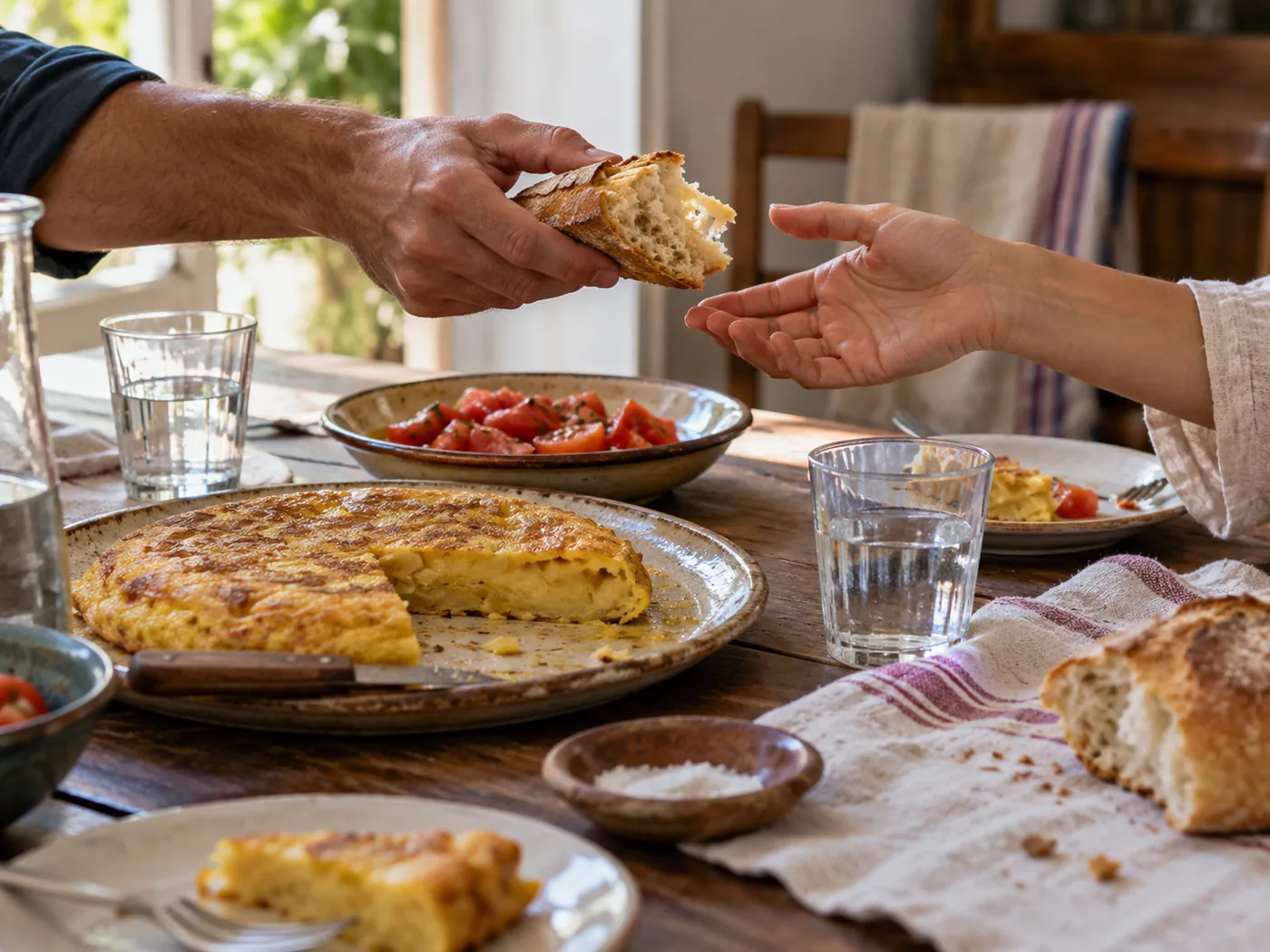
Several dishes in the middle of the table can change how a meal feels. Passing bread, serving another spoonful and asking whether someone wants more keep attention moving between people. The food can be simple. A memorable lunch does not require an elaborate tasting menu or an expensive bottle.
Regional habits give those gatherings different flavors. The table of a Basque txoko has its own setting; a meal in La Rioja belongs to another landscape. What connects them is the space a shared meal can create.
The person who keeps getting up
An unhurried lunch looks different depending on which side of the kitchen door you occupy. Someone has remembered the bread, watched the oven and noticed that another chair is needed. Someone will eventually face the glasses. The generosity of a table begins well before the first guest sits down, and its work does not vanish because the afternoon feels effortless.
That is a good reason to make participation part of the pleasure. Carry a dish, refill the water, help clear a space. A host who spends the whole meal moving between rooms has been given very little of the leisure everyone else is enjoying. Sharing the work allows the person who made the gathering possible to become part of it.
At its best, a long lunch does not require a performance of hospitality. Nobody needs five courses to prove affection. One good pot of food, bread within reach and people prepared to help can do the job beautifully. The memory is unlikely to include an exact inventory of the crockery. It may include the moment the cook finally sat down.
Stories that refuse to finish
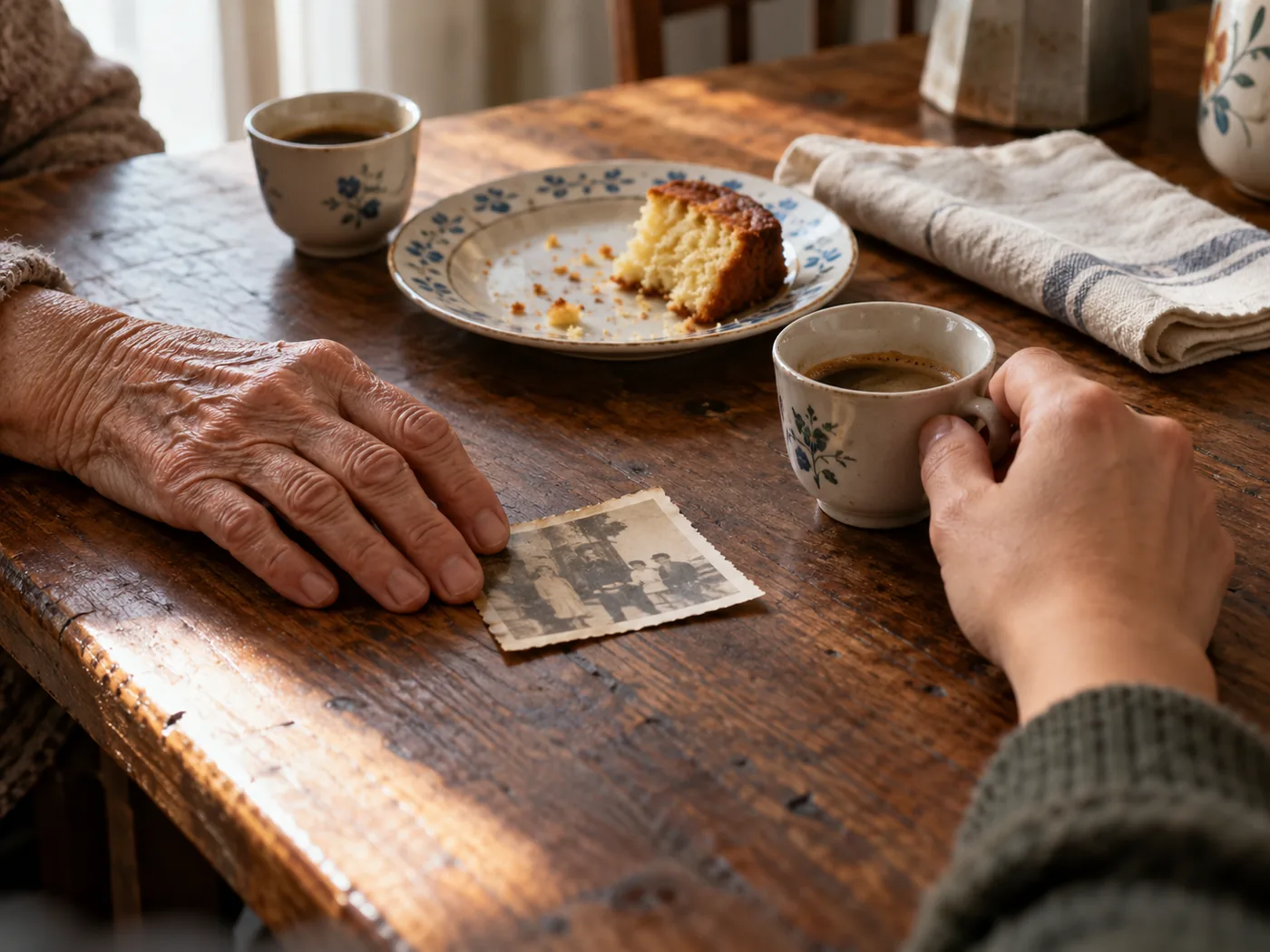
Consider what happens when the meal has apparently ended. A question about an old photograph becomes a story about somebody’s first job. A younger person discovers that a grandparent once had an entirely unexpected ambition. Somebody interrupts to correct the date. The correction produces a second story, and the original question disappears without anybody feeling cheated.
These conversations rarely follow the tidy structure of a good interview. They circle, repeat and occasionally land somewhere tender. A family anecdote that once seemed tedious can change as the listener grows older. You hear a different part of it. The joke remains the same; the person behind it becomes clearer.
A table can make that kind of listening easier because there is no need to maintain eye contact across a solemn conversation. Hands find a cup or fold a napkin. The ordinary objects give people something to do while they find the words. A subject too heavy for an announcement may arrive quietly between coffee and the offer of another slice.
What children remember
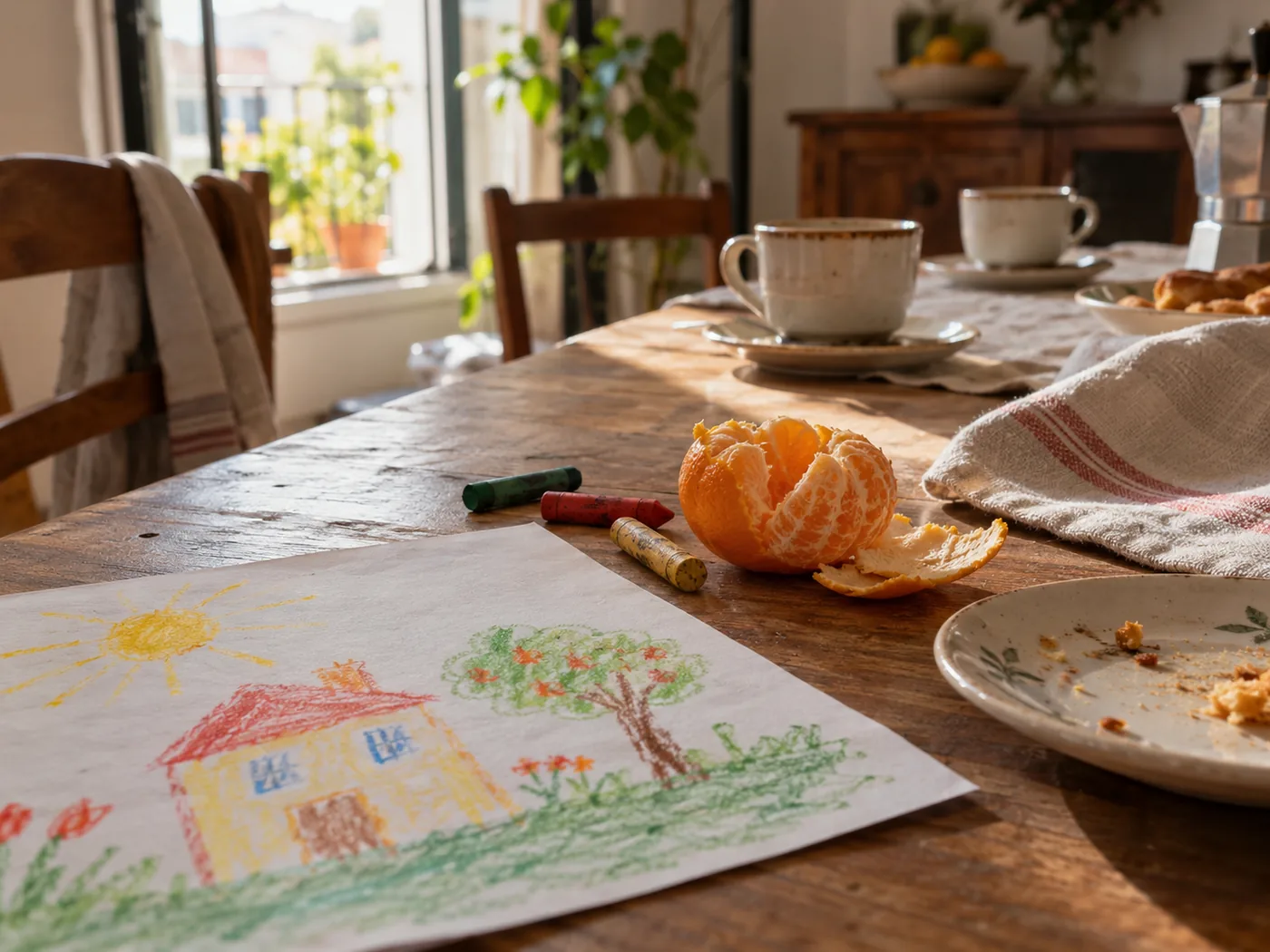
For a child, the adult conversation may feel endless. There is a limit to the appeal of hearing how complicated parking used to be. A place to draw, a short game or permission to move around can make room for children without requiring them to perform the same version of a good afternoon as everyone else.
Years later, the memory may be less about the food than the arrangement of the room: whose chair stood near the window, who always laughed first, which voice called them back for dessert. Familiar gatherings leave those small traces because they happen repeatedly. No single lunch has to become a defining occasion.
The lesson is not to keep every child at a table for hours. It is to let shared time have enough variety that people of different ages can belong to it. An afternoon can stretch without anybody being trapped. There can be conversation, movement, quiet and an early departure. Good company leaves room for the people who need it differently.
Following the table’s pace
For a visitor, the useful lesson is to leave an occasional afternoon open. Order what you enjoy, listen to the people around you and allow a pause before the next plan. There is no obligation to stay for hours or to drink alcohol. Even a short lunch can feel generous when it is given your attention.
Sometimes the most lasting memory of a trip is a place at the table and a conversation that nobody was in a hurry to finish.