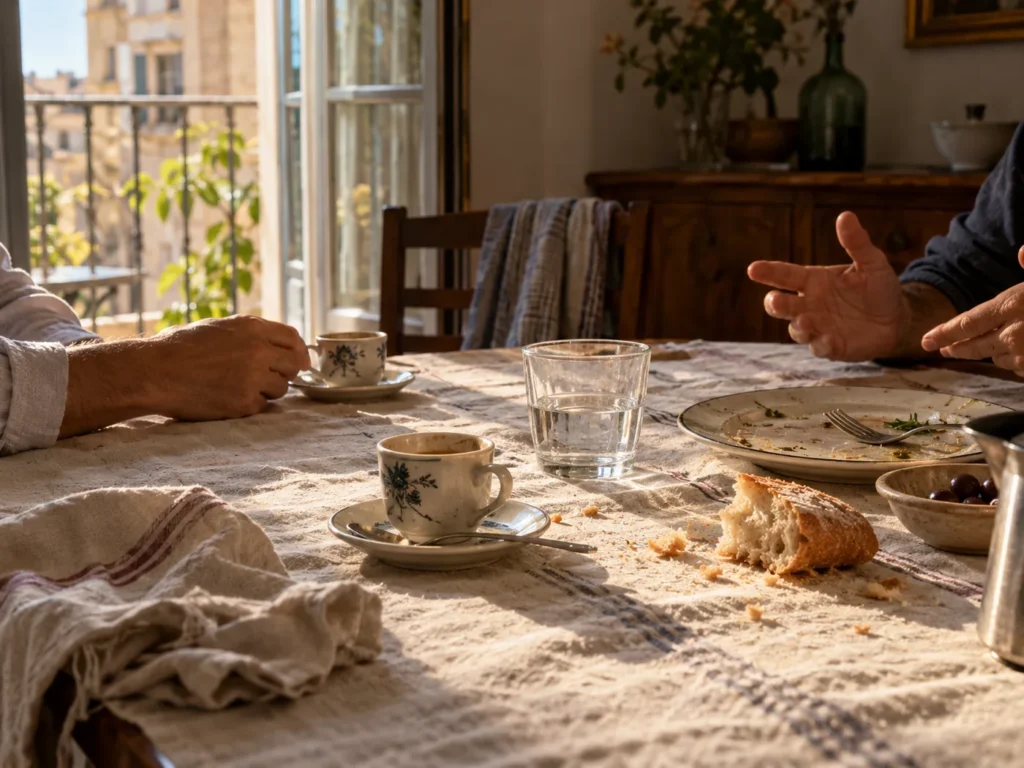
There is a valley in northern Spain whose name has traveled much farther than its borders.
La Rioja is the smallest autonomous community on mainland Spain, yet its cultural footprint is enormous. Rolling vineyards, medieval towns, monasteries, the Ebro River, and generations of growers and winemakers have turned this compact region into one of the world’s great wine landscapes.
Here, wine is not simply a drink. It is agriculture, architecture, family history, commerce, ritual, and time made visible.
La Rioja sits between influences. Atlantic weather enters from the north and west; Mediterranean conditions reach from the east. Mountains help shelter the valley. The Ebro and its tributaries organize both landscape and settlement.
The result is a region that feels intimate rather than spectacular — and all the more rewarding for it.
Where Language Left Early Traces
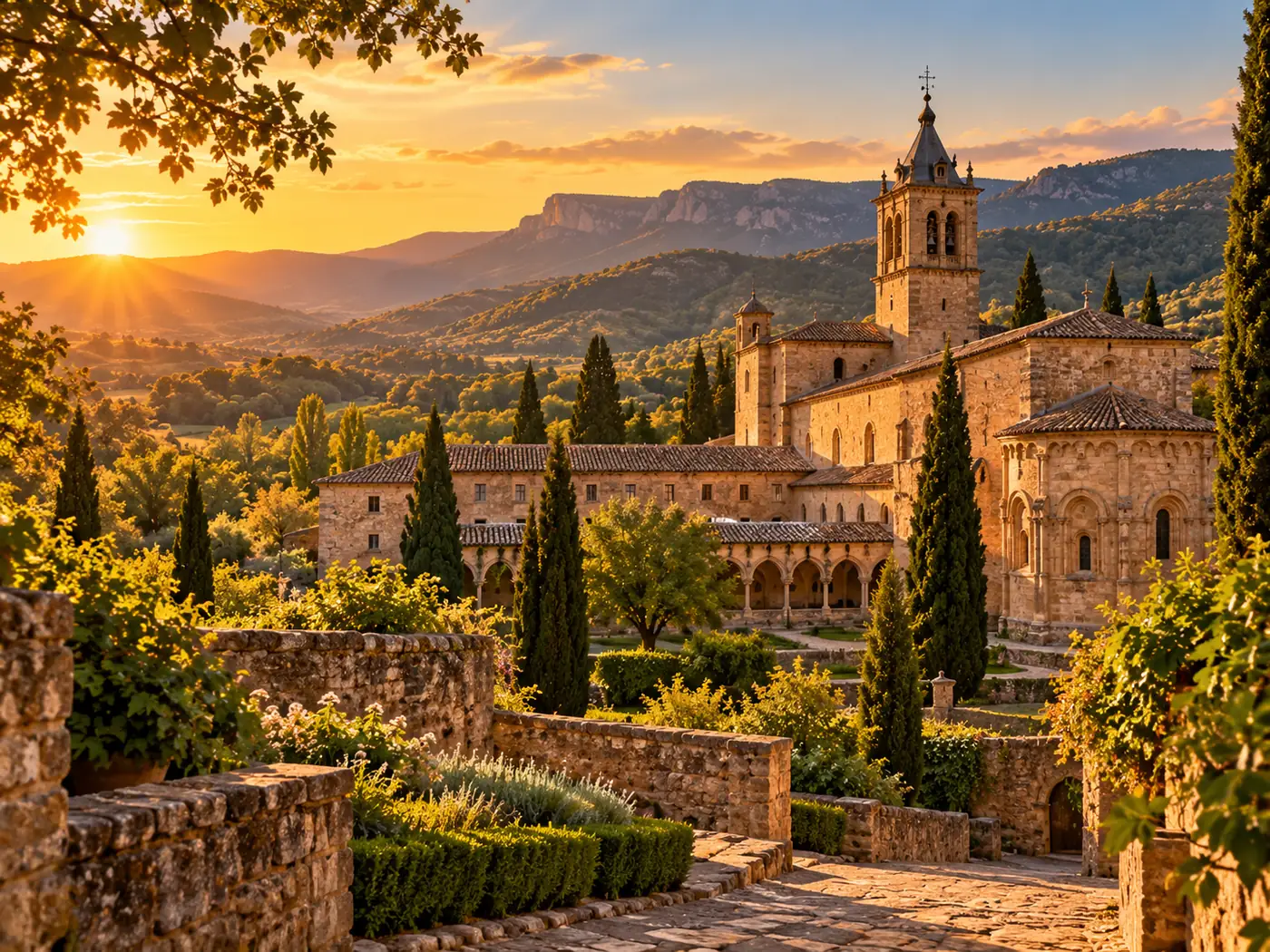
In the valley of San Millán de la Cogolla, the monasteries of Suso and Yuso preserve one of the most important sites in the history of written culture on the Iberian Peninsula.
Medieval manuscripts associated with San Millán contain the famous Glosas Emilianenses, annotations written alongside Latin texts in early Romance and, in some cases, Basque. They were once popularly described as the “first words in Spanish.” Scholars today paint a more complicated picture, because other early Romance documents also survive elsewhere.
That nuance does not make San Millán less extraordinary.
The monasteries remain a powerful symbol of the long transition from Latin to the Romance languages that eventually developed into modern Spanish and neighboring languages. UNESCO recognizes Suso and Yuso as a World Heritage Site.
La Rioja also lies on the Camino de Santiago. Santo Domingo de la Calzada became one of the route’s great medieval stopping points, associated with the famous legend of the rooster and hen that returned to life after being cooked.
Logroño, the regional capital, still receives pilgrims crossing the Ebro before they continue west.
A Landscape Made by Vines
Nothing defines La Rioja visually like its vineyards.
In spring they turn bright green. In late summer the grapes darken. Autumn brings reds, ochres, and gold. Winter leaves the vines bare and sculptural, rows of dark wood drawn across pale soil.
Rioja was awarded official Denominación de Origen status in 1925 and became Spain’s first Denominación de Origen Calificada in 1991. Today, the Rioja wine region extends beyond the political borders of La Rioja into parts of Álava and Navarra, another reminder that wine geography does not always follow administrative maps.
Tempranillo is the dominant red grape, joined by Garnacha, Graciano, Mazuelo, and others. White varieties include Viura, Garnacha Blanca, Tempranillo Blanco, and more.
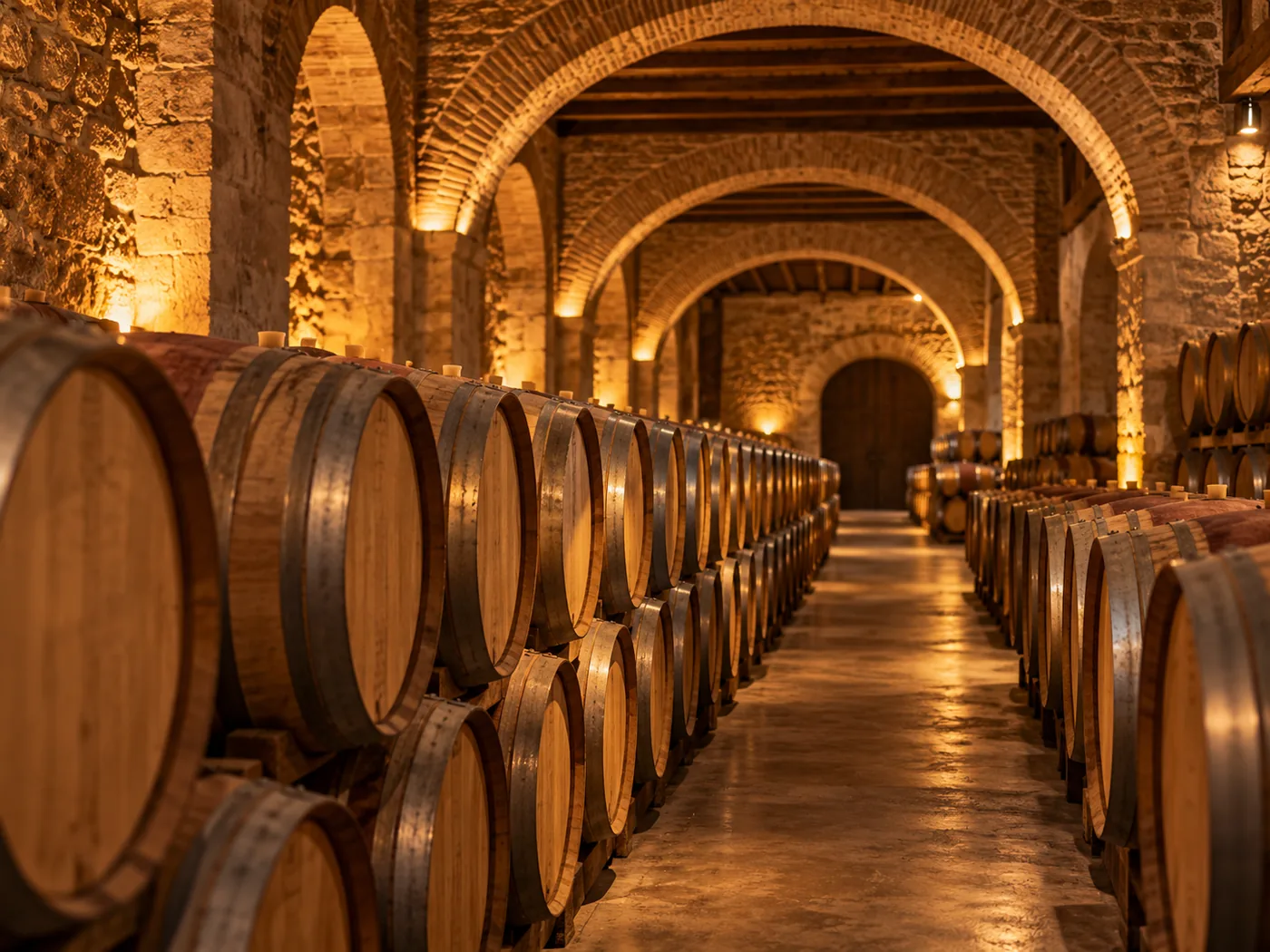
Yet grapes alone do not explain Rioja. The culture is also built around aging, blending, cooperage, cellars, and an extraordinary network of wineries ranging from nineteenth-century houses to avant-garde architectural landmarks.
Haro’s Barrio de la Estación is one of Spain’s most remarkable concentrations of historic wineries. Elsewhere, contemporary buildings have become destinations in their own right: Frank Gehry’s dramatic hotel at Marqués de Riscal in Elciego and Santiago Calatrava’s Bodegas Ysios near Laguardia are among the best-known examples.
Harvest Time and the Rhythm of the Year
Wine regions teach you to read time differently.
Winter pruning, spring growth, flowering, ripening, harvest, fermentation, aging — each season brings its own work and its own anxieties.
When I was young, a few friends and I went to work the grape harvest in La Rioja. We worked from dawn to dusk and quickly discovered how much effort lies behind those romantic pictures of vineyards. One day was enough. By the end of it we felt as if we had been beaten up: exhausted, sore, and suddenly aware of the hard labor behind a glass of wine.
After that day, we chose Logroño’s San Mateo festivities over going back to the fields. It was a decision very much in keeping with our age: we had lasted one day, and the festival was considerably more appealing. Looking back, the memory has also left me with respect for the people who do that work throughout the harvest. Behind every glass is an effort you will never find printed on the label.
San Mateo and Zurracapote
For me, San Mateo has a place in my youth as well as on the calendar. These are Logroño’s great annual festivities, held around September 21 and tied to the beginning of the grape harvest. The grape treading and the offering of the first grape must to the Virgen de Valvanera reflect the city’s connection with wine.
Zurracapote, also called zurra, is made by macerating wine with sugar, cinnamon, lemon, and fruit. Each group of friends has its own recipe. Its danger is how easily it goes down: sweet and refreshing, it can make you forget the alcohol. Take it slowly.
Its tradition grew around groups of friends sharing the drink in cellars and festival gathering places. Calahorra’s town council describes a gesture of hospitality: visitors were offered a drink, and comparing recipes eventually led to competitions.
In Haro, the famous Battle of Wine turns the hills around the town purple each June as participants soak one another with red wine in one of Spain’s most unusual festivals.
These celebrations can look chaotic from the outside. Underneath them lies a simple truth: the vineyard remains a social calendar as much as an agricultural one.
The Food That Belongs Beside the Wine
Riojan cooking is built from the same landscape as its wine.
Patatas a la riojana combine potatoes, chorizo, peppers, and slow cooking into one of northern Spain’s classic comfort dishes. Chuletillas al sarmiento — small lamb chops grilled over burning vine cuttings — turn vineyard waste into aroma and heat.
The Ebro Valley provides peppers, artichokes, asparagus, beans, and other vegetables that are central to local cooking. Mushrooms arrive with autumn. Stews and roasts bring the mountain tradition into the valley.
Calle Laurel, One Bar at a Time
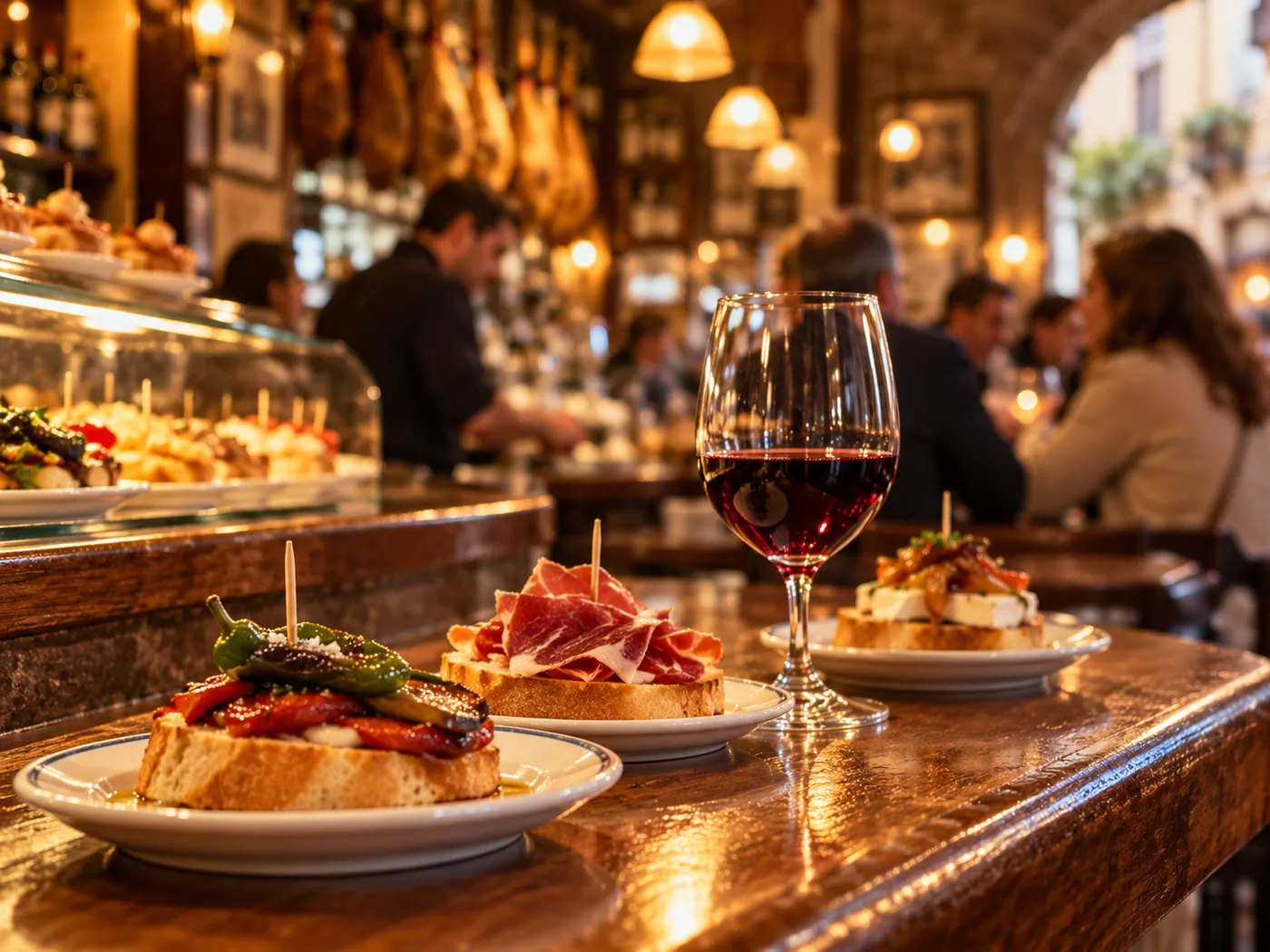
My memories of Logroño also run through Calle Laurel and its pinchos, the small bites served at the bar. Among them are the mushrooms: griddled, served on bread with garlic sauce and a small shrimp on top. To me, they belong to the city as much as its wines do. A bar, a bite, and a walk to the next doorway: that is another way to get to know a place.
Calle Laurel and neighboring streets form one of Spain’s great small-scale eating experiences: a few steps, one bar, one specialty, a small glass of wine, then another doorway and another bite. The pleasure comes not from sitting down for a formal meal but from moving slowly through the city one taste at a time.
This may be the most Riojan way to understand abundance: not excess all at once, but a sequence of small pleasures.
Beyond the Cellar Door
It is easy to reduce La Rioja to wine tourism, but that would miss much of the region.
Briones rises above the Ebro with stone streets and wide views across vineyard country. Nájera carries the memory of medieval kingdoms. Calahorra preserves traces of Roman Calagurris and remains closely tied to the agricultural wealth of the lower Rioja. The Cameros mountains open into quieter landscapes of villages, forests, and long roads.
The valleys of Leza, Jubera, Cidacos, and Alhama protect dramatic ravines, birdlife, abandoned settlements, and a very different Rioja from the polished tasting rooms of the wine route.
That contrast is essential. Wine may be the region’s international language, but it is not its only one.
A Slower Measure of Time
La Rioja rewards travelers who stop counting attractions.
A vineyard does not hurry because a visitor has a schedule. A barrel cannot be persuaded to age faster. Lunch will take the time it takes. A village square becomes more interesting after you have been sitting there for twenty minutes.
This is one of the quiet lessons of wine country: value is often created by waiting.
A bottle contains weather, soil, work, decisions, and time. A landscape of vines contains the memory of generations who learned to read the same slopes differently from year to year.
La Rioja is not a place to rush through on the way somewhere else.
It is a place to taste slowly.
And perhaps to remember that some of the best things in life improve precisely because nobody tried to hurry them.