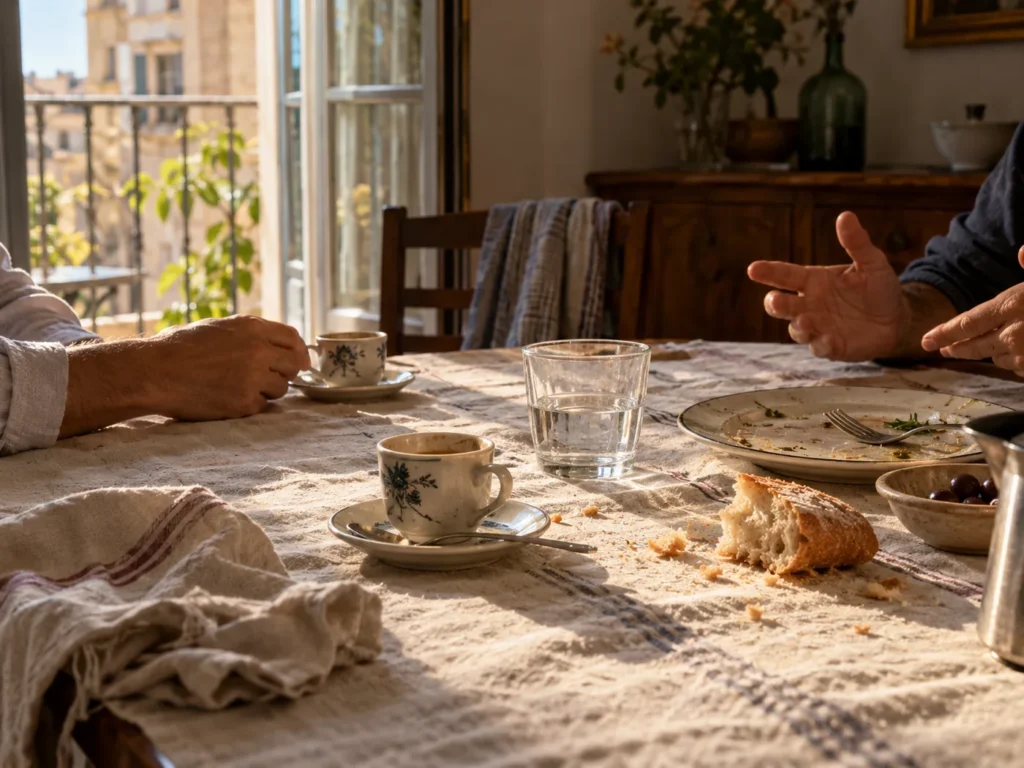
For many visitors to Spain, one small detail often becomes unforgettable.
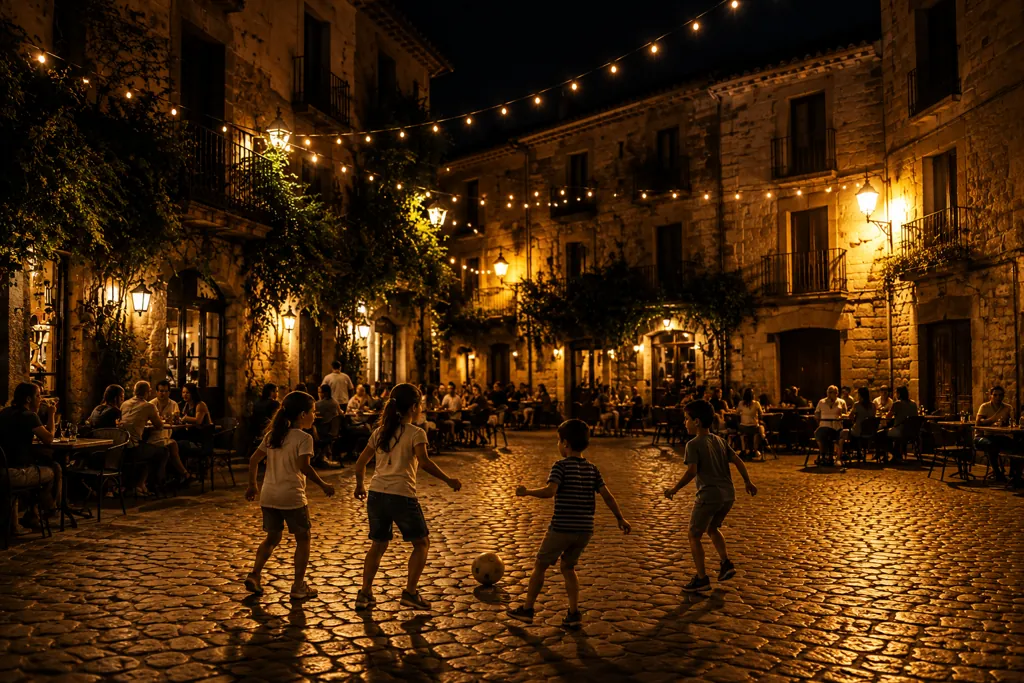
Children are still outside late at night.
In plazas, narrow streets and seaside promenades, families gather while children continue playing long after sunset. Parents talk slowly over drinks and dinner while grandparents sit nearby watching everything unfold naturally.
What surprises many visitors is not the noise or activity, but the feeling of safety, community and human connection that still exists in many Spanish towns and cities.
In Spain, evenings often belong as much to families and conversations as they do to restaurants and nightlife.
The plaza as a shared room
A plaza can bring several generations into the same space without giving them all the same activity. Adults talk, children invent a game and someone pauses on the way home. The arrangement can feel informal because no one has to organize the entire evening for it to happen.
Benches, places to sit and nearby cafés help make that shared time possible. A pedestrian space gives an evening a different character from a street dominated by traffic. The design of a place matters as much as the habits of the people using it.
Play that does not need a program
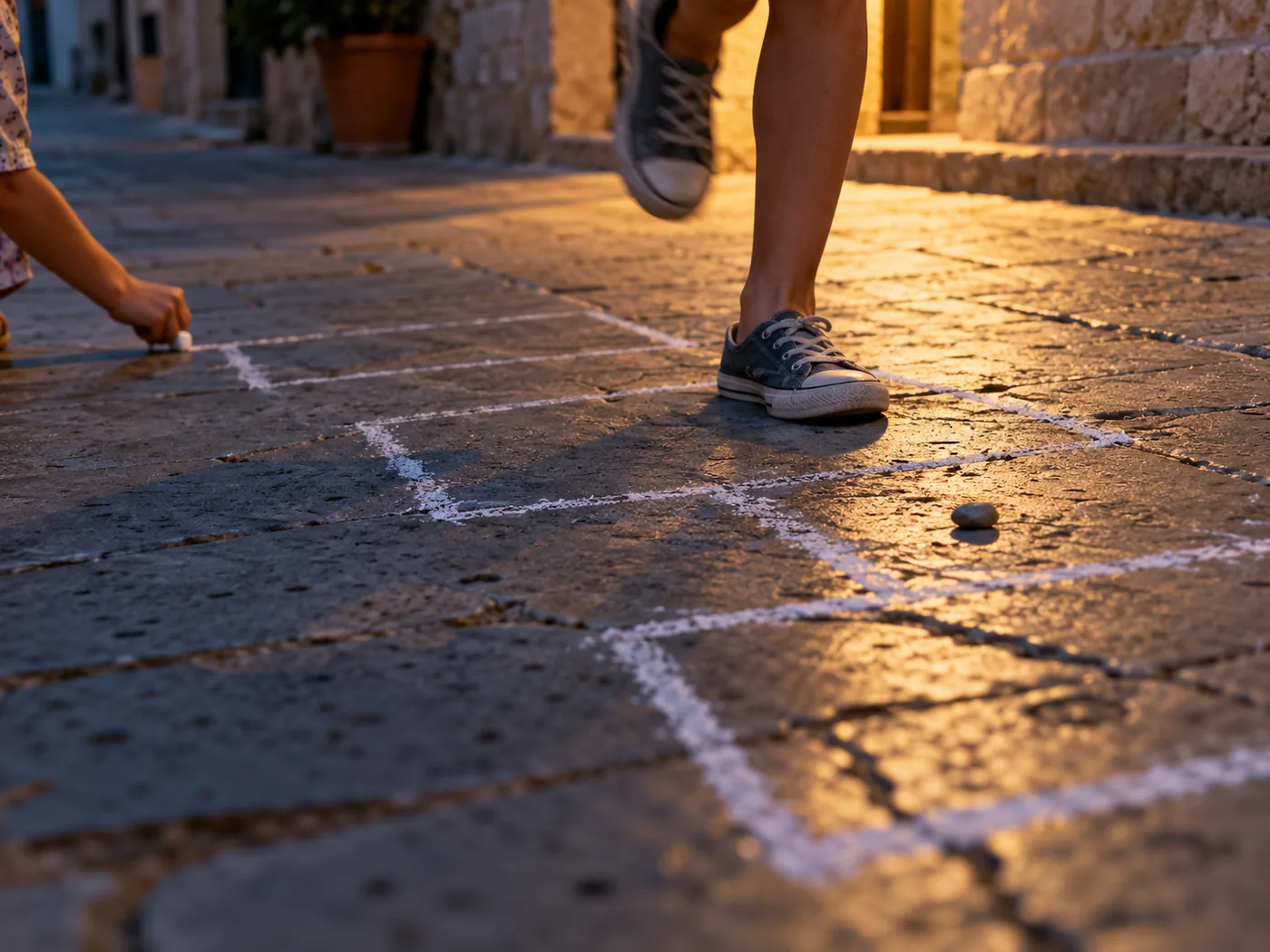
A ball, a few steps or the edge of a square can become the starting point for a game. Children negotiate rules, change teams and work out what to do next. Sometimes the game lasts; sometimes it dissolves into conversation and starts again elsewhere.
Those scenes invite an adult to notice the value of unscheduled time. An evening does not always need an activity designed in advance. The place and the people already there may provide enough.
Every evening has its limits
Late outdoor play is not the routine of every Spanish child. Schooldays, family schedules, weather and individual needs all make a difference. The scene is especially noticeable on free evenings and in good weather, when families have more room to stay outside.
Nor does a lively plaza establish that a whole town is safe. Adults still need to pay attention to traffic, surroundings and the children in their care. What a visitor observes is a particular shared moment, not a guarantee about every street.
The game belongs to those playing it
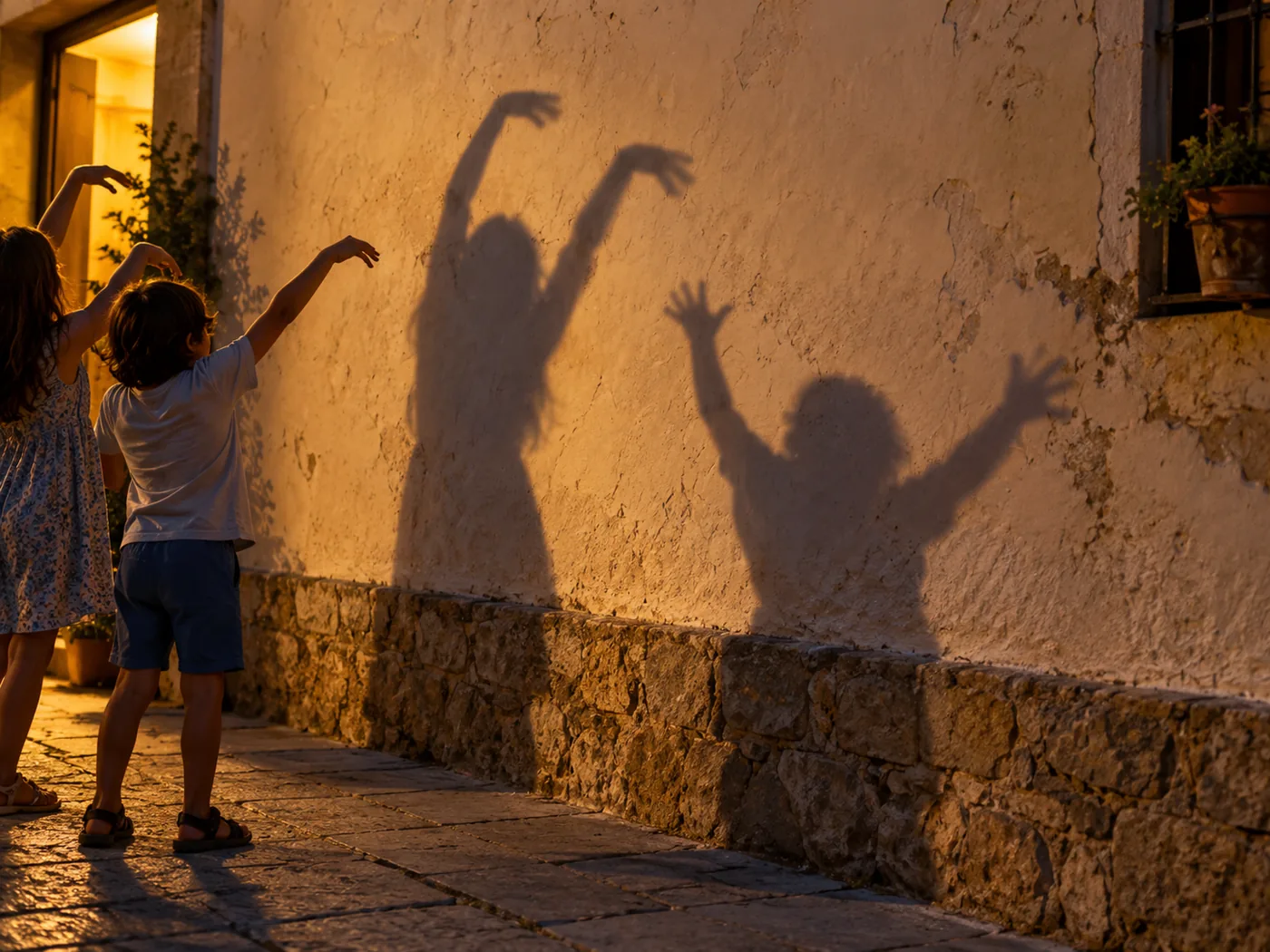
Watch a group invent a game and the first thing you may notice is how much talking happens before anybody runs. There is a boundary to agree on, a team to rearrange and one important rule that somebody has apparently introduced only because it favors them. Fairness is being discussed with great conviction and occasionally limited consistency.
An adult could settle the matter faster. That does not always mean an adult needs to settle it. When the surroundings are appropriate and the children can manage the disagreement, a little time gives them room to negotiate. They learn that another person may have a different idea of what makes a game worth playing.
This is not a competition between organized sport and free play. Children can enjoy both. The difference is that an improvised game gives its participants responsibility for making the afternoon work. They may change the rules, abandon a score or include someone who arrived late. The game belongs to the people in it, and it can grow into something nobody planned.
The adults around the edge
The edge of a play space has its own small society. A parent keeps half an eye on a child while finishing a sentence. Another stands up because somebody needs water. A conversation pauses, resumes and takes a new direction. The evening is shared, but attention moves continually between company and care.
That attention is what makes the scene possible. Children enjoying freedom are not necessarily children left without supervision. Distance, age, the surroundings and each child’s needs matter. A parent may look relaxed while remaining very aware of where a game has moved. The appearance of ease should not hide the work involved.
For a traveler, the considerate response is to enjoy the atmosphere without turning other people’s children into material for a photograph. A public setting does not remove the need for privacy and respect. The scene can stay in your memory without being collected on a screen. Sometimes watching briefly, then returning to your own companions, is the best way to remain part of the evening without taking possession of it.
The last five minutes
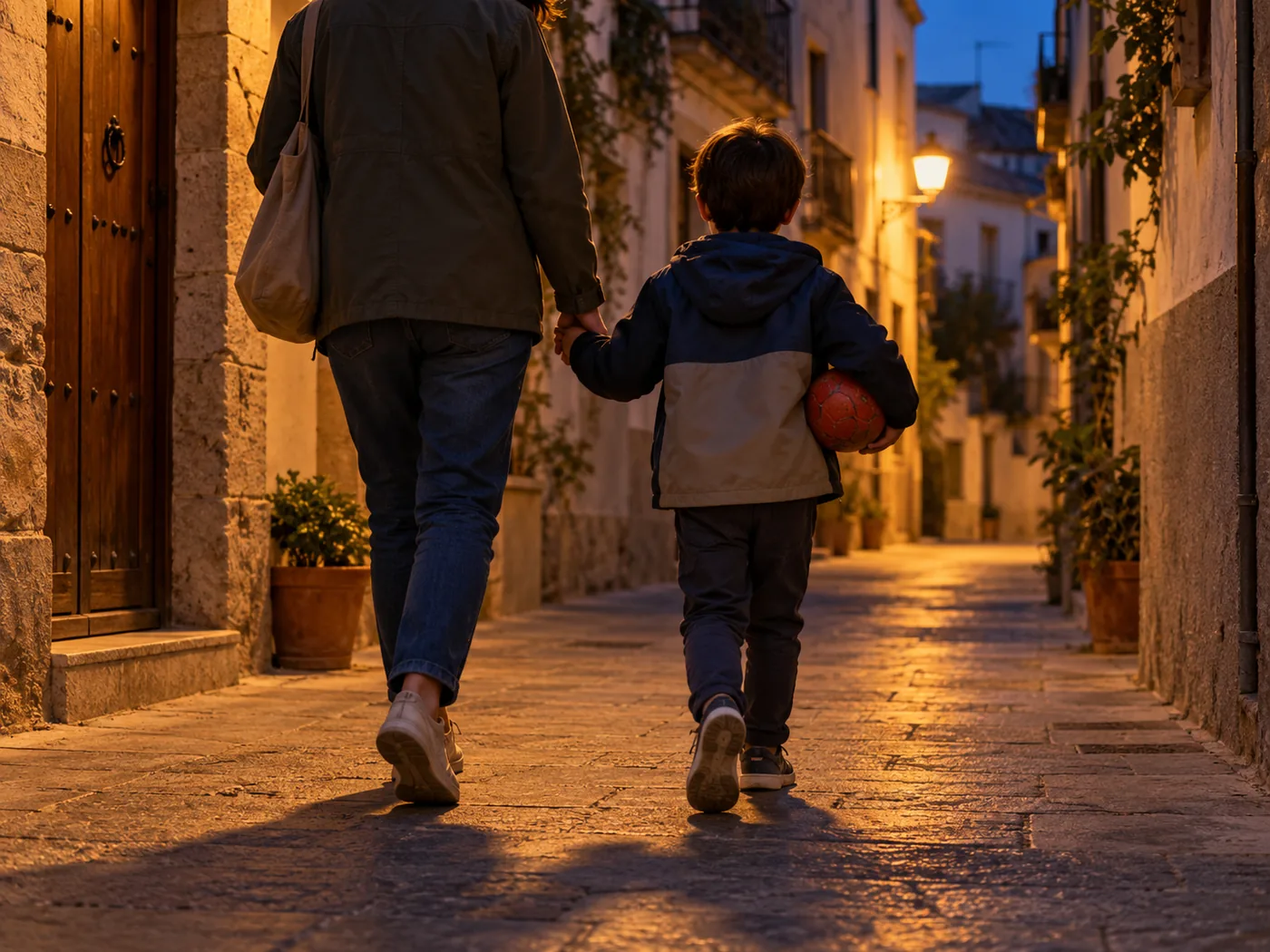
Every adult who has tried to end a good game knows that five minutes can become a remarkably flexible unit. One final turn is requested. Then another child arrives, which changes everything. A ball rolls away, somebody retrieves it and departure has to be discussed again from the beginning.
There is affection in that familiar negotiation, but there are practical limits too. Sleep, the journey home and tomorrow’s responsibilities still exist. Leaving does not destroy the value of the evening. A clear promise about when to go can be kinder than repeated warnings nobody expects to mean anything.
What lasts may be the walk home rather than the final result. A child describes a disputed goal, remembers something funny or falls quiet beside an adult. The game begins to become a story. These are small exchanges, easily lost when everyone is already looking at tomorrow. Allowing a little attention on that last stretch can give the evening its proper ending: people going home together, carrying something that belonged to the ordinary day.
Learning from an ordinary scene
For a visitor used to quieter evenings, the surprise may lie in seeing family life continue in public after dinner. It is another way to understand the everyday rhythms of Spain, alongside meals, walks and conversations.
There is something worth carrying home from the scene even if your own neighborhood looks different. Make room for play that has no score to report, for a conversation that can wait while a child finishes a game, and for time spent together without a timetable. These are small parts of a slower life that do not depend on being on vacation.