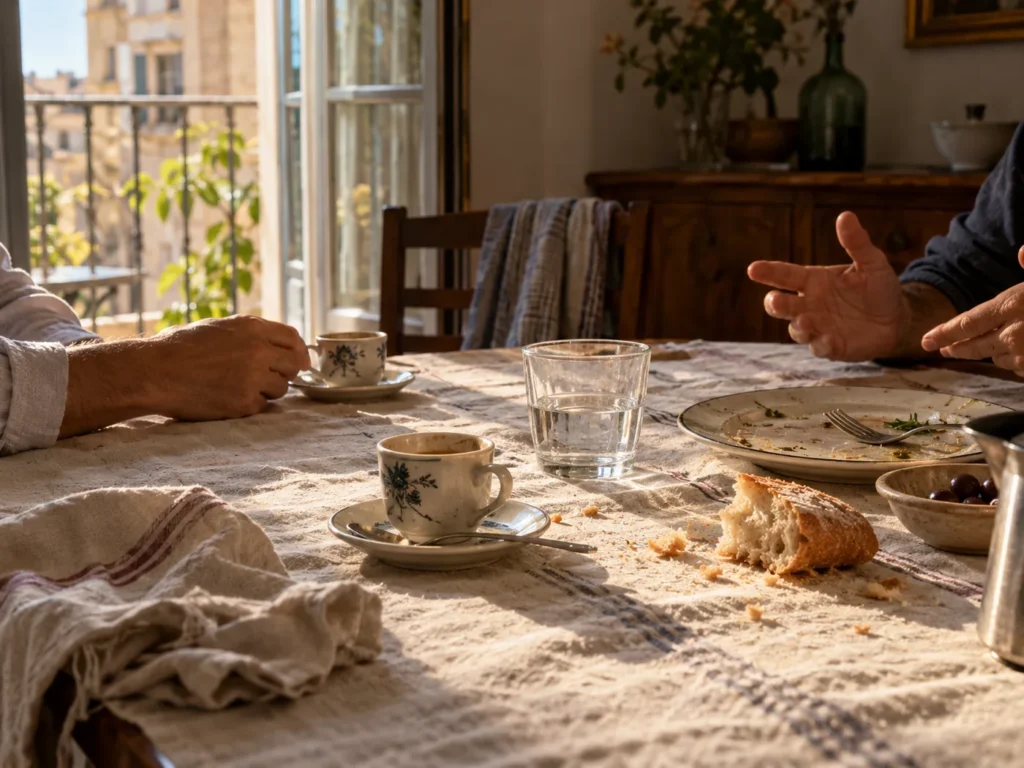
Rioja is often associated with wine, but the real magic of the region moves at a much slower pace.
Mornings begin quietly between vineyards and small stone villages. Long lunches stretch naturally into the afternoon while bottles remain open on the table. Evenings arrive slowly, with golden light falling over the hills and conversations continuing without urgency.
For many visitors, Rioja is not simply a wine destination. It is a place that reminds people how enjoyable life can feel when nobody is rushing.
Perhaps that is why so many travelers leave Rioja wanting to return almost immediately.
Give the weekend one base
A short stay becomes calmer when you choose one place to sleep and resist the urge to cross the region repeatedly. A town can supply enough for a weekend: a square, a bakery, a walk and a few places to eat. Returning to the same room gives the journey an anchor.
For an idea of the landscape, Briones offers a hilltop setting above the Ebro and a historic center. It is one possible starting point, rather than a requirement for a successful trip. Other towns may suit your interests and practical needs better.
Let Saturday have an empty hour
Begin with breakfast and a walk before choosing the next activity. A visit to a winery can be part of the day, but one well-paced visit often leaves more room for the place than several appointments back to back. Check availability directly and allow time around the booking.
Lunch can be the other fixed point. Regional food deserves attention beyond the glass beside it. Seasonal vegetables, stews and simple local cooking can make the meal worthwhile whether or not wine is part of your plans. The pleasure is in sitting comfortably and letting the conversation develop.
Sunday without a final sprint
A second morning does not have to become a race to fit in everything missed on Saturday. Revisit a street you enjoyed, find another viewpoint or take a shorter walk. Leaving while you still feel curious gives you a reason to return.
The landscape changes with the season. Weather, daylight and the work happening in the vineyards shape what a day feels like. It helps to have an indoor possibility and enough flexibility to change an outdoor plan.
Arrival is part of the weekend
A weekend can begin in the car with a familiar negotiation: how much must be accomplished before the journey counts as worthwhile? Two days seem generous until they acquire a list of appointments. The first useful decision may be to remove something before you have even arrived.
Give the first evening a modest task. Find your accommodation, settle in and take a short walk. Notice how the town is arranged rather than trying to understand it immediately. A square, a grocery shop and the route back to your room provide enough geography for the moment. You can let the rest become clear tomorrow.
Dinner then has a chance to feel like an arrival rather than a reward for completing a schedule. There is no need to order the most impressive thing on the menu. Choose what appeals, ask a question if you want to and allow the journey to leave your shoulders. Sometimes the first sign that a weekend has begun is simply that nobody needs you to be anywhere else.
Looking at a working landscape
Vineyards are easy to turn into a beautiful background. Their lines make a photograph feel orderly, and the changes in light can occupy a traveler for a long time. Yet the landscape is also somebody’s place of work. A quiet view and a demanding day can exist on opposite sides of the same image.
Keeping that in mind changes how you move through it. Use public routes and respect signs, property boundaries and any instructions at a place you visit. A field is not automatically available for wandering because it looks inviting. Good attention includes noticing where your presence might get in the way.
You do not have to understand every stage of winemaking to find the landscape interesting. Questions can begin with what is visible: the shape of the ground, a village above the river, the relationship between a road and the surrounding fields. Looking slowly is a form of curiosity. It becomes richer when the people who maintain a place remain part of the picture, even when they are outside the frame.
The weekend with different companions
A couple, a family and a group of friends will not experience the same two days, even if they sleep in the same town. One person wants a long explanation; another wants to move. A child may be fascinated by a small unexpected detail and entirely unmoved by the view everyone else has been discussing.
A good plan leaves space for those differences. Agree on a few things that matter to everybody, then allow some separate interests. Taking a shorter walk or sitting out an activity need not become a judgment on the rest of the group. A holiday is easier when enjoyment does not have to be unanimous at every moment.
Food and rest help more than ambitious scheduling. Leave time to eat, bring what your companions need and keep an easy alternative available. If wine is part of the visit, arrange transport so that nobody has to combine drinking with driving. The most generous version of a slow weekend is one in which everyone can enjoy the day without being pushed to keep somebody else’s pace.
Wine culture for more than wine drinkers
La Rioja’s vineyards are part of an agricultural and cultural landscape. Architecture, villages and the passing seasons offer ways to appreciate it without making every activity a tasting. Families and people who do not drink can build a visit around those other interests.
To put the weekend in context, read our introduction to La Rioja’s wine culture. Then leave some space between the ideas. A good slow weekend needs a few possibilities and enough time to enjoy choosing between them.