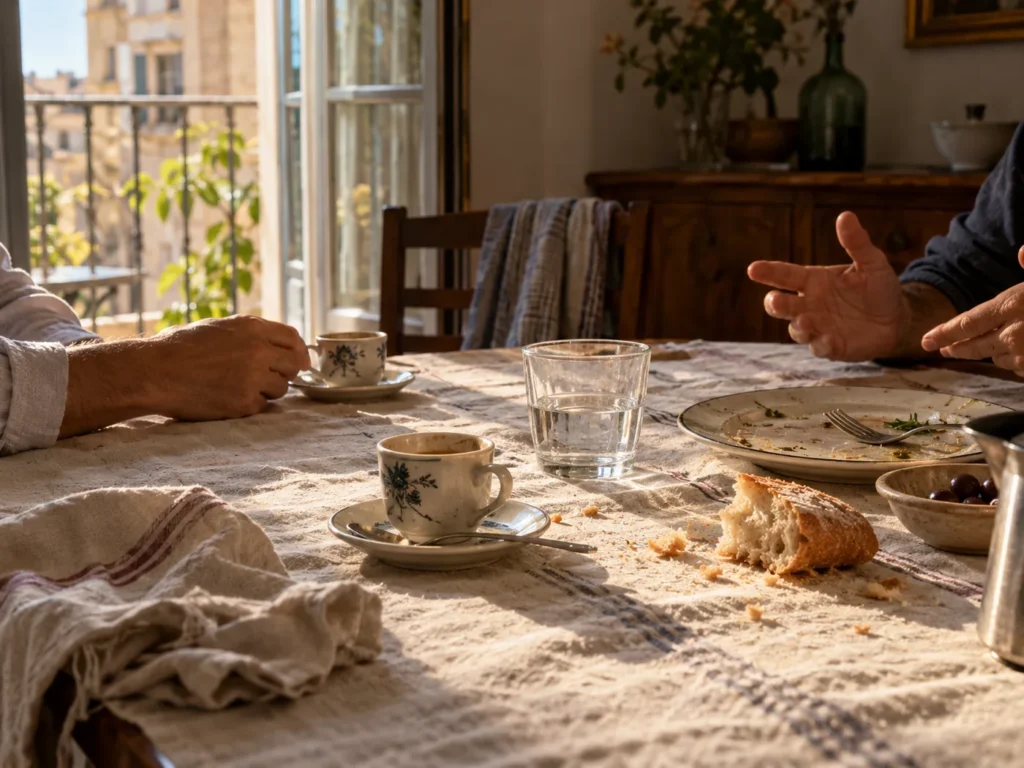
There is a place in northern Spain where rain is not simply weather. It is part of the landscape’s personality.
Asturias is a principality of steep mountains, deep valleys, working villages, and a coastline that meets the Cantabrian Sea with cliffs, coves, and long stretches of sand. The terrain has helped shape a culture that is independent in spirit, deeply attached to place, and remarkably generous around a table.
Asturias does not need much decoration. Moss grows on old stone walls. Hórreos stand above the ground on pillars. Rivers run cold through forests. Cattle graze on high pastures. In kitchens, fabada cooks slowly while cider waits to be poured.
Here, nature is not scenery added around daily life. It is part of daily life.
Where the Mountains Fall Toward the Sea
Few places in Spain compress such dramatic changes of altitude into such a short distance. In the east, the limestone massifs of the Picos de Europa rise to well over 2,000 meters, yet the coast is never far away.
Near Covadonga, the lakes of Enol and Ercina sit high in the mountains, surrounded by pasture and rock. Farther west, Somiedo belongs to another great mountain landscape of Asturias, known for glacial lakes, traditional brañas, and some of the most important brown-bear habitat in the Cantabrian Mountains.
The famous Cares Route cuts through an extraordinary gorge between steep rock walls. It is one of the region’s classic walks and a reminder of how vertical Asturias can feel.
Then there is the coast. Blowholes known as bufones force seawater and air through cracks in the limestone when conditions are right. Gulpiyuri, a tiny inland beach connected to the sea through underground channels, looks almost impossible the first time you see it.
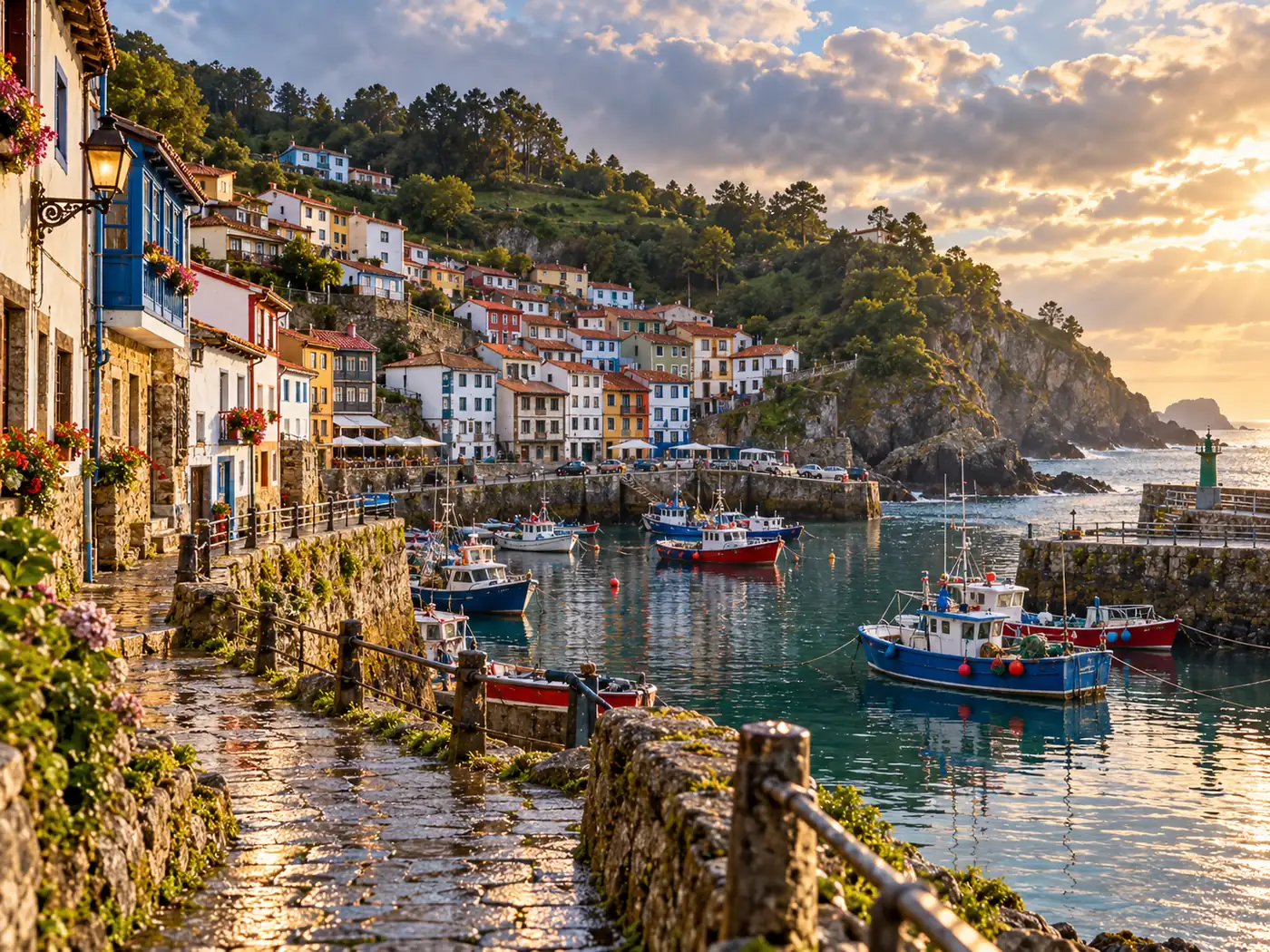
Fishing towns and villages add another layer. Llanes combines old stone streets with beaches and a lively harbor. Lastres spills down a hillside toward the sea. Cudillero gathers around its small port like an amphitheater of colored houses and steep stairways.
Covadonga, Memory, and Identity
For Asturias, few places carry more symbolic weight than Covadonga.
Tradition places a battle there in the early eighth century in which Pelayo and his followers resisted an Umayyad force. Over centuries, the episode became deeply connected to the story of the Christian kingdoms of northern Iberia and later to narratives of the Reconquista.
Today, the sanctuary is both religious site and national symbol for many Asturians. The Holy Cave, the sound of water beneath it, and the nearby basilica create an atmosphere that feels part pilgrimage, part mountain refuge.
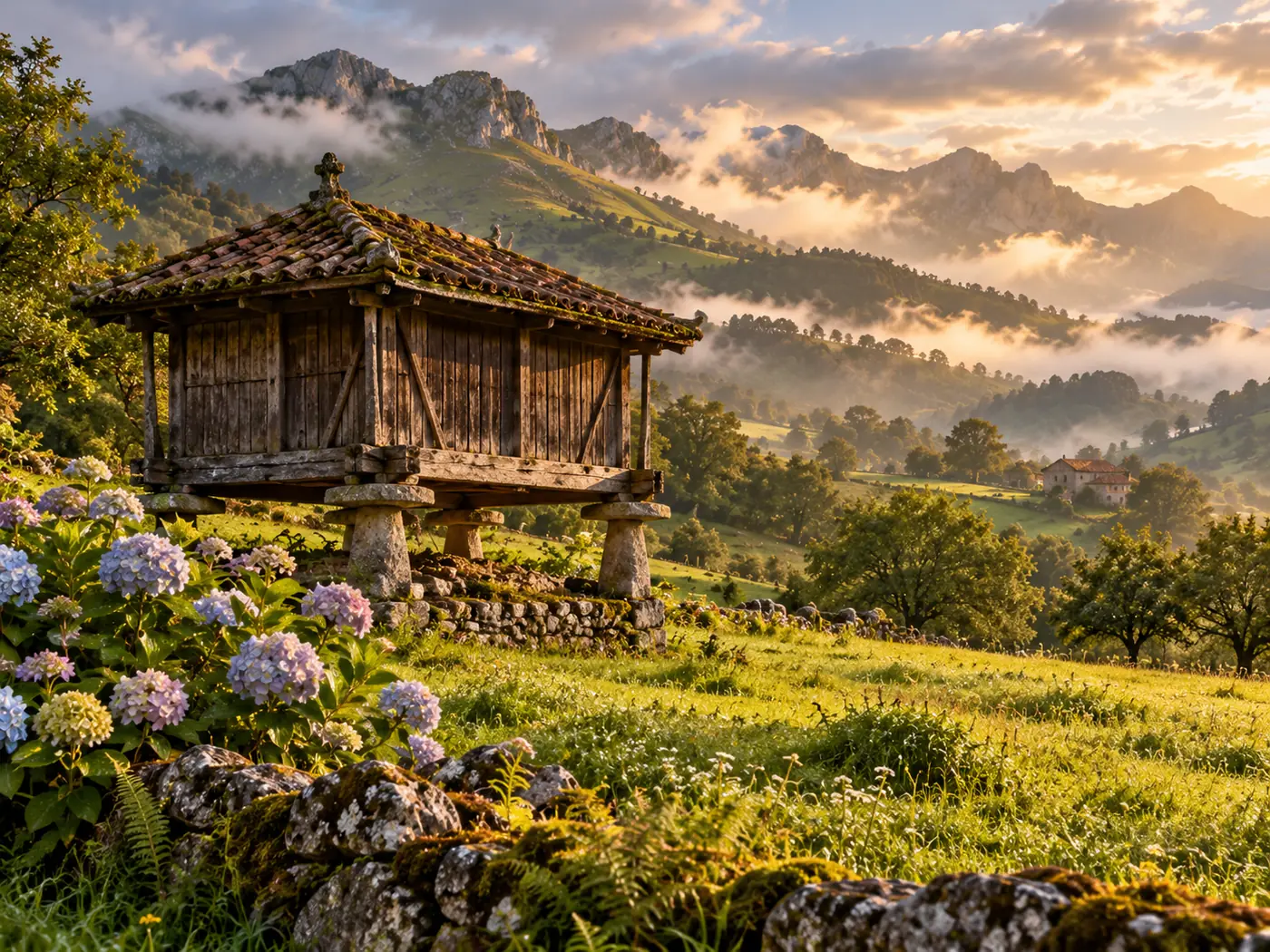
Asturian identity also survives through more ordinary things. The local bagpipe accompanies village festivals and celebrations. Hórreos and larger paneras preserve the memory of rural households that depended on careful storage of grain and food. Traditional houses, pasture systems, and seasonal movement into the mountains still shape how the landscape is read.
The Ritual of Natural Cider
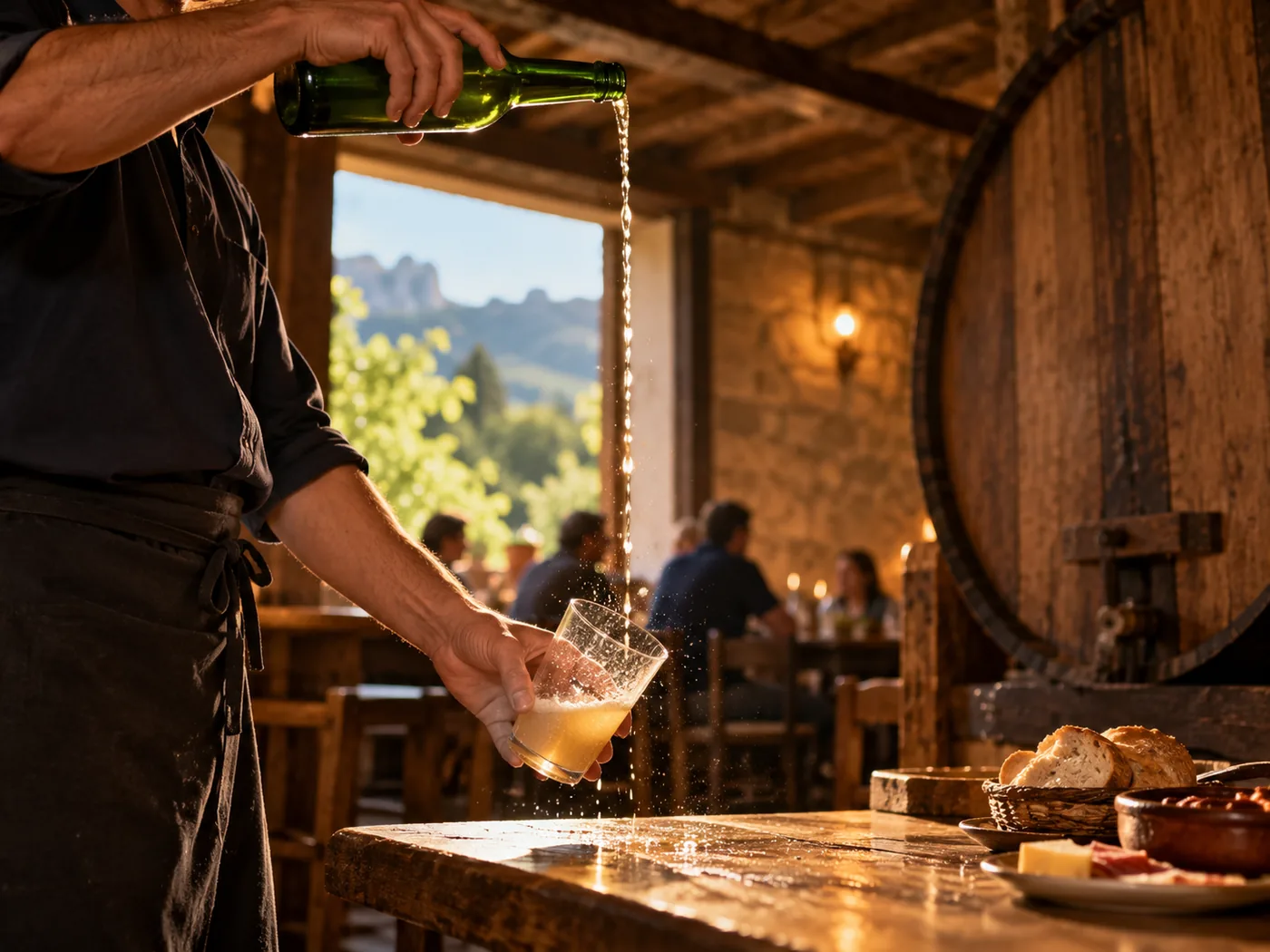
If there is one ritual every visitor should understand, it is Asturian natural cider.
The bottle is held high, the glass low, and a narrow stream falls through the air before striking the side of the glass. This is escanciar: pouring cider in a way that briefly aerates it and wakes up its aromas.
Only a small amount — a culín — is poured at a time. You drink it soon after it lands in the glass, while it is still lively.
Sidrerías, or cider houses, are among Asturias’s great social institutions. They are places to eat, talk, argue, celebrate, and stay longer than planned. Traditionally, groups often shared glasses; today practices vary, but the communal spirit remains.
Cider in Asturias is not simply a drink. It is choreography, conversation, and belonging.
I love Asturian cider. There is something irresistible about watching it poured from up high, taking that freshly poured culín, and letting the conversation flow. It goes down beautifully in good company. It is not only the taste I love, but also the shared ritual around it.
A Cuisine Built for Slow Fire
Asturian cooking is generous and unembarrassed by appetite. It was shaped by farming, mining communities, mountain winters, dairy culture, and a rich coastline.
The emblematic dish is fabada asturiana: large white fabes cooked slowly with compango — usually chorizo, blood sausage, and cured pork. Done well, the beans remain tender and creamy while the broth becomes deep and rich.
Pote asturiano brings together greens, potatoes, beans, and pork in an even more rustic expression of the same philosophy: time does much of the work.
Meat is important too. Asturian beef appears in grills and stews, while the now-famous cachopo places ham and cheese between large pieces of veal before breading and frying them. It is not subtle. That is part of the appeal.
From the sea come bonito tuna, hake, shellfish, octopus, and whatever the day’s catch allows.
And then there is cheese.
Cabrales, matured in natural caves in the Picos de Europa area, is the best known internationally, but Asturias has one of Europe’s richest cheese traditions. Gamonéu, Afuega’l Pitu, Casín, and many smaller local cheeses form a dairy map of valleys, breeds, pastures, and techniques.
I have another personal weakness here: Cabrales is one of my favorite cheeses. I love its intensity, its character, and the way its flavor stays with you. Asturias has so much to say through its cheeses and its cider that those pleasures deserve a story of their own.
For dessert, rice pudding often arrives with a caramelized surface. It tastes less like restaurant theater than something remembered from a family kitchen.
Industry, Villages, and Reinvention
Asturias is not only rural nostalgia. Coal mining and heavy industry shaped entire generations, especially in the Nalón and Caudal valleys. The decline of those industries brought economic and social pain that still forms part of the region’s identity.
Former mining landscapes are now being reinterpreted through industrial heritage, museums, cultural projects, and new forms of tourism. At the same time, rural depopulation remains a serious challenge in many villages.
Yet Asturias has also become a refuge for travelers — and increasingly residents — looking for something the modern world often makes difficult to find: space, green landscapes, strong local food, and a slower relationship with time.
Country houses, restored casas de indianos, hiking routes, small producers, and nature-based tourism are giving old places new reasons to remain alive.
The Beauty of a Cloudy Sky
To travel through Asturias is to accept that you may get wet. That is not a failure of the trip. It is part of the place.
Mist can hide a mountain and reveal it ten minutes later. Rain turns meadows almost impossibly green. A gray afternoon makes a cider house feel warmer. A break in the clouds can throw sudden gold across a valley.
Happiness here can be surprisingly simple: a culín of cider, bread on the table, cows in a meadow, the sound of a bagpipe somewhere in the distance, and no reason to hurry.
Asturias reminds us that paradise does not require endless sunshine.
Sometimes it only needs a landscape worth caring for — and people stubborn enough to keep caring for it.