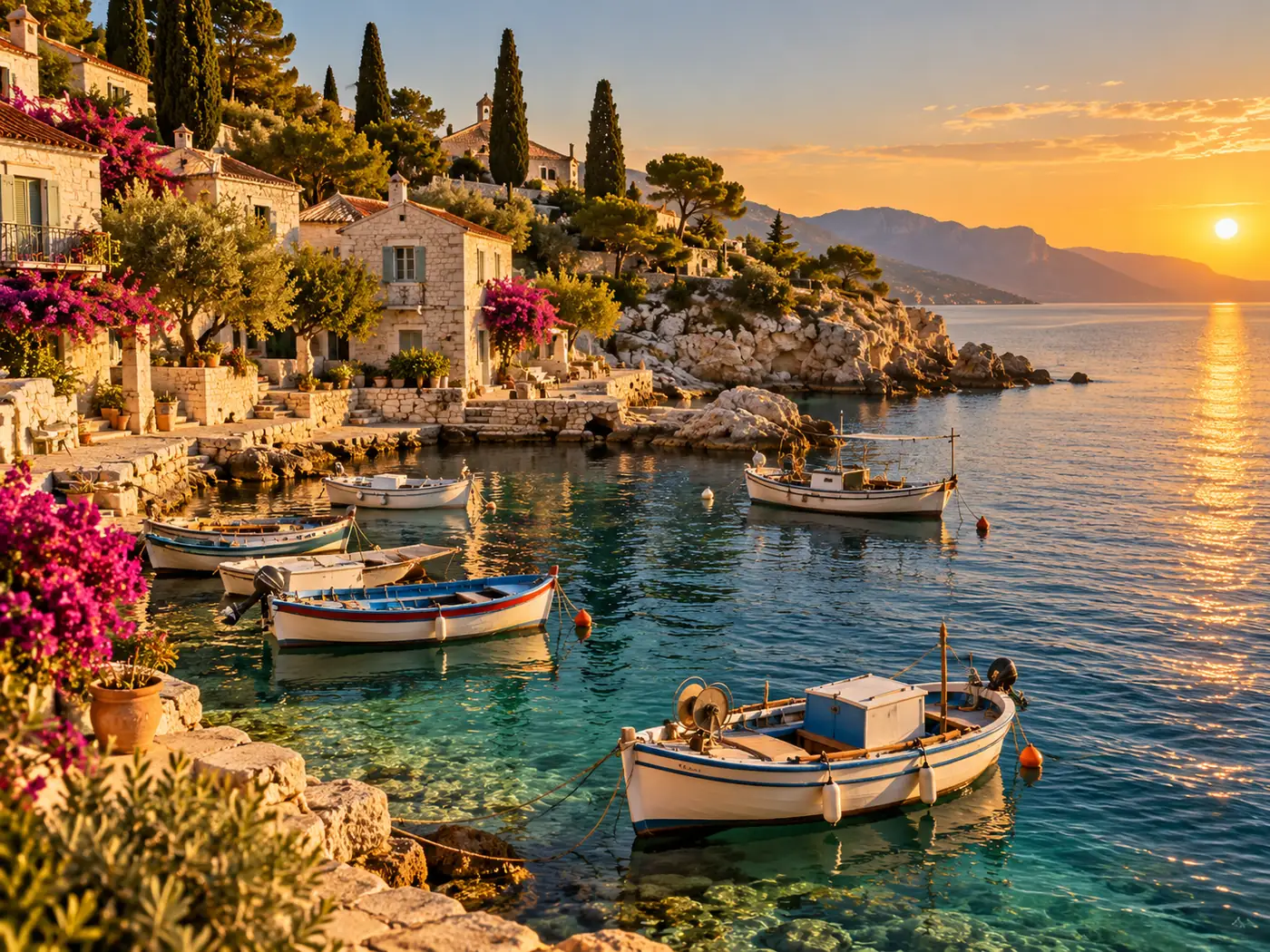
The Mediterranean is not simply a sea. It is an idea, a dream, one of the great cradles of Western civilization.
The Romans called it Mare Nostrum — “Our Sea” — a vast inland world where human history has been written in olive oil, wine, salt, stone, and sunlight.
To stand on its shore is to look at much more than a landscape. You are looking at layers of civilization, one laid over another, like waves that arrived, withdrew, and left something behind.
From the Strait of Gibraltar, where legend says Hercules separated Europe from Africa, to the eastern shores of the Levant, the Mediterranean touches three continents and has connected Europe, Asia, and Africa for thousands of years.
Across these waters traveled merchants, soldiers, philosophers, fishermen, pilgrims, and migrants. Ideas moved with them. Democracy developed on its shores. Greek philosophy crossed it. Roman law spread around it. Judaism, Christianity, and Islam transformed the societies surrounding it. Trade routes connected cities that today belong to different countries but once shared the same maritime world.
The Mediterranean has always been a place of contradictions: the blinding white light of a Greek island and the cool shadow of a bazaar; the stillness of the sea at sunset and the sudden violence of the mistral sweeping across Provence. More than anything, it is a way of life — one that has fascinated the rest of the world for centuries.
For me, the Mediterranean is not only somewhere to visit. It is my adopted home. I spent thirteen years living along its coast — long enough to stop seeing it through a tourist’s eyes and begin to feel its light, its rhythms, and its everyday pleasures as part of my own life.
It is also where my partner, the mother of our son, comes from. I like to joke that I ended up “exporting” her to the Basque Country. Thirteen years leave you with a lot of stories, so that chapter of my life deserves an article of its own — and probably a few laughs along the way.
A Journey Along the Coast of Memory
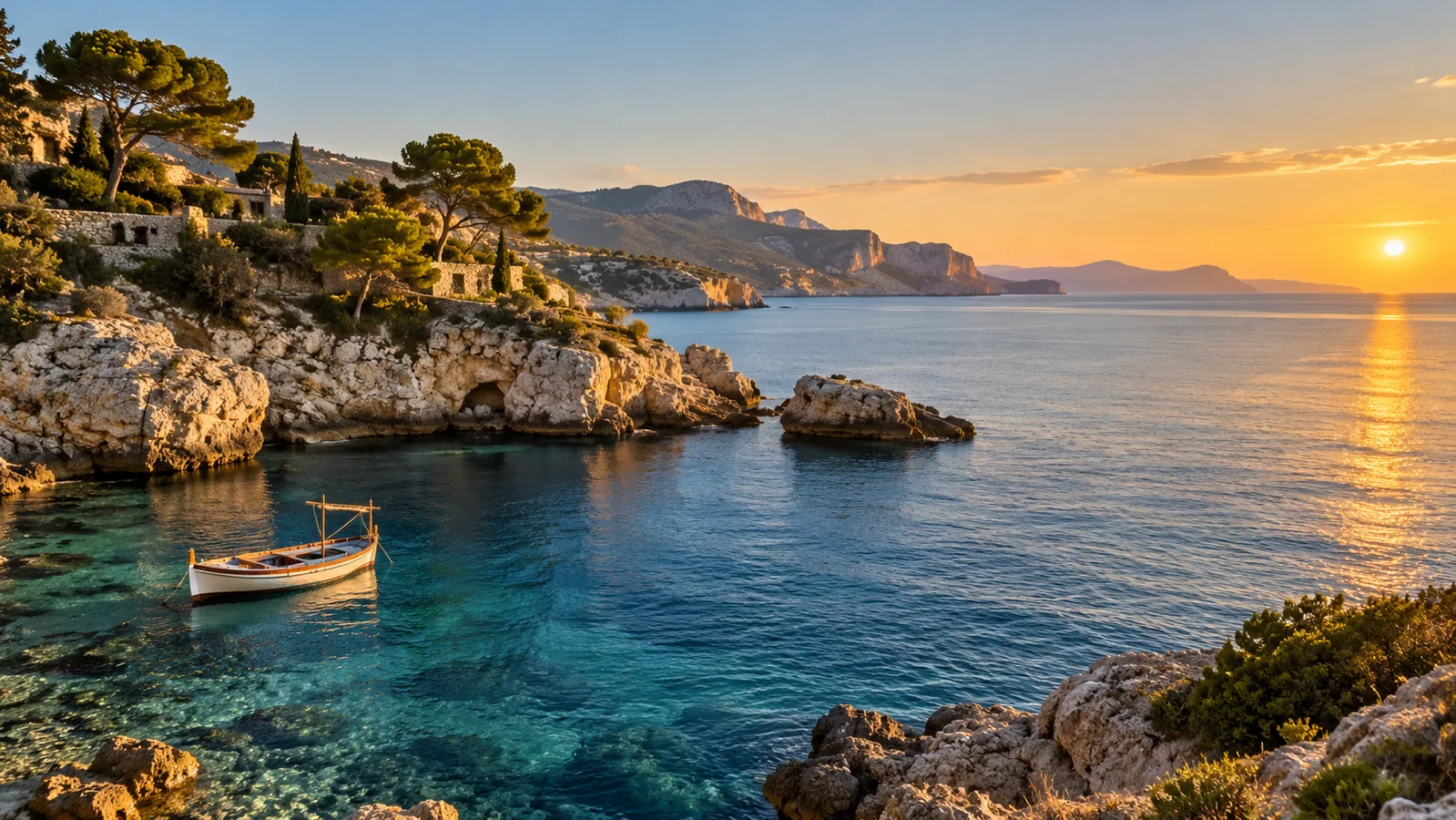
Traveling around the Mediterranean can sometimes feel like walking through an open-air history book.
In Athens, the Parthenon still looks down over a city that helped shape philosophy, politics, and critical thought. In Rome, the ruins of the Forum speak of an empire whose roads, laws, and language changed much of Europe and the Mediterranean world. In Jerusalem, history and faith occupy almost every stone. Few cities carry such an extraordinary concentration of memory, devotion, and conflict.
But the real magic of the Mediterranean is not found only in monuments. It is also found in smaller things: a wooden fishing boat tied to a quiet harbor on the Costa Brava; bougainvillea spilling over the white wall of a courtyard in Tunisia; the smell of jasmine on a warm Sicilian evening; the call to prayer drifting across a port while church bells sound somewhere nearby.
The Mediterranean has been shaped by Phoenicians, Greeks, Romans, Arabs, Berbers, Normans, Venetians, Ottomans, and countless other peoples. They did not simply disappear. They remain in architecture, vocabulary, family names, music, gestures, recipes, and ways of seeing the world.
Sometimes history survives not in a museum, but in the way bread is baked or a grandmother seasons a stew.
The Table That Connects Three Continents
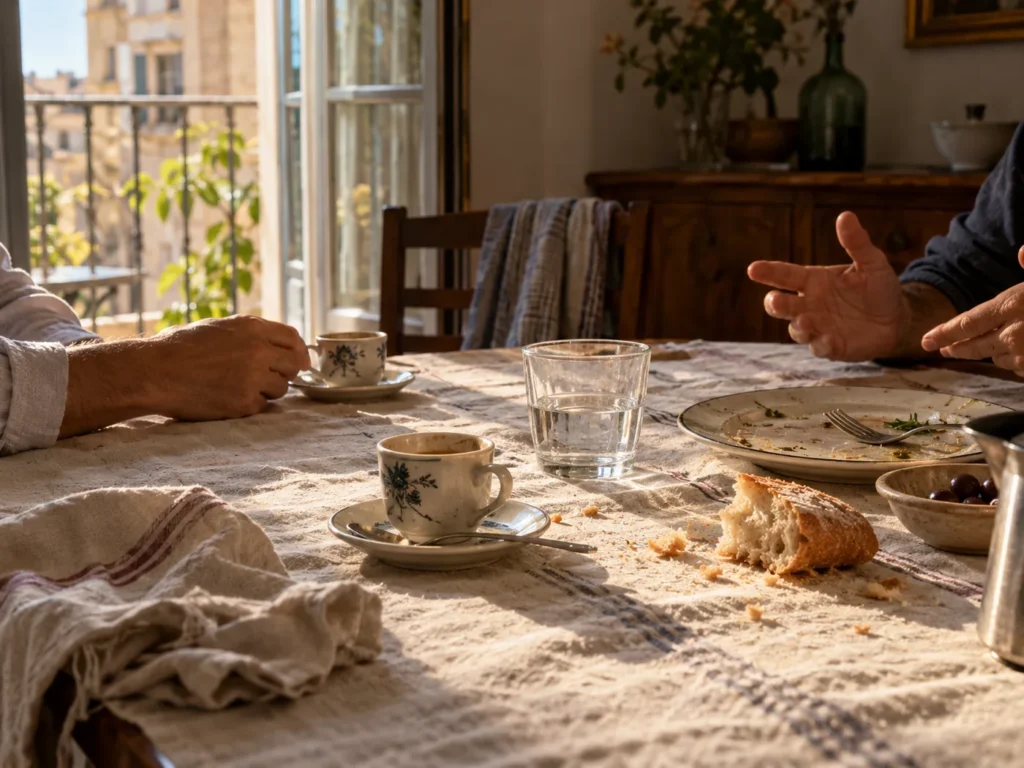
Perhaps nowhere is the shared Mediterranean culture more visible than at the table.
The Mediterranean diet is recognized by UNESCO as Intangible Cultural Heritage, but reducing it to a list of healthy ingredients misses the point entirely. It is also a social ritual. Food is a reason to gather. Meals are allowed to last. Conversation matters.
The ancient foundations of Mediterranean agriculture were simple: wheat, grapes, and olives. Bread. Wine. Olive oil.
Around them grew hundreds of cuisines that are unmistakably different yet strangely familiar to one another: a bowl of hummus in Beirut, sweet-and-sour caponata in Palermo, fresh fish baked in salt on Spain’s Mediterranean coast, couscous shared around a Moroccan table, or a Greek salad eaten in a small taverna overlooking the Aegean.
The recipes change, but the philosophy often does not: good ingredients, seasonal food, time, and company.
Mediterranean cooking rarely makes sense when rushed. Neither does the meal itself. In Spain, lunch may continue long after the plates have been cleared. In Italy, coffee extends the conversation. Elsewhere, tea, fruit, or something sweet performs the same function. The meal ends when the conversation ends. Not before.
Paradise and Its Contradictions
It would be easy to turn the Mediterranean into a postcard: blue water, white villages, fishing boats, terraces under the sun. But that would tell only half the story.
The Mediterranean has always been a frontier as well as a bridge. Empires fought over it. Religions confronted and influenced one another around it. Ports grew rich while other communities remained poor.
Those contradictions have not disappeared. The same waters crossed by yachts and cruise ships are also crossed by people risking their lives in fragile boats in search of safety or opportunity. For some, the Mediterranean represents leisure. For others, survival.
That contrast is uncomfortable, but it is impossible to understand the modern Mediterranean without acknowledging it. The sea is beautiful and tragic at the same time — hospitable and hostile, a place where civilizations mixed and also a boundary between very different levels of wealth and opportunity.
Perhaps that is why the Mediterranean remains so fascinating. It has never been simple.
The Art of Living Slowly
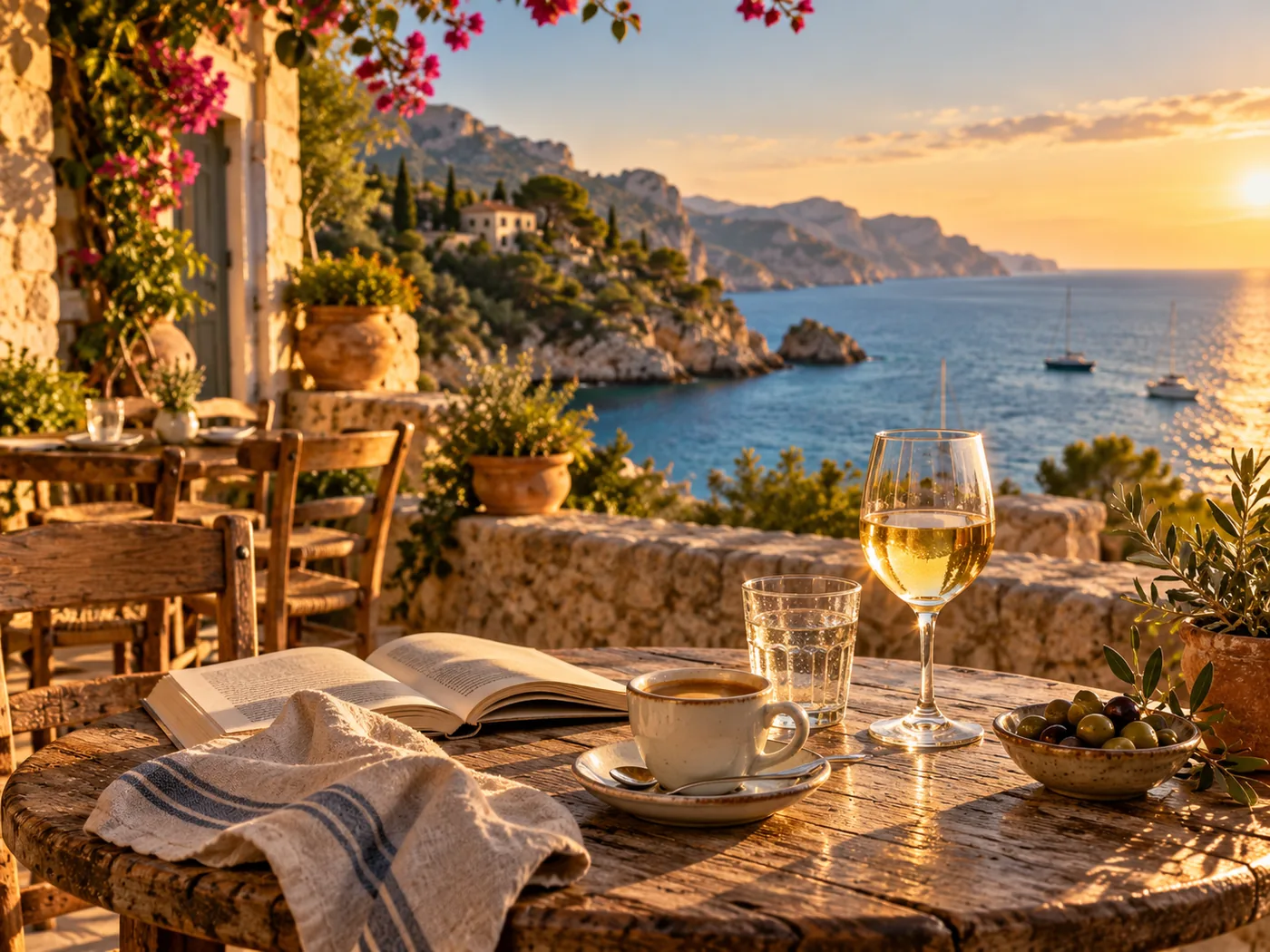
And yet, beyond history, politics, and geography, there is another Mediterranean inheritance that has quietly conquered the world: the idea that life should actually be lived.
Not optimized. Not constantly accelerated. Lived.
A summer afternoon can stretch almost indefinitely when there is nowhere important to be. Dinner can begin late. Children can still be playing outside after dark. A coffee can last forty minutes. A conversation does not need an agenda.
Leisure is not necessarily wasted time. Sometimes it is the part of life for which all the other hours exist.
This rhythm appears differently across the Mediterranean: the sound of a Spanish guitar drifting through an open window, the noise of a morning market, a shaded terrace in Italy, a game of cards outside a café, a shuttered room during the hottest part of the afternoon while the streets outside shimmer in the heat.
The world often calls this la dolce vita. But the idea is older and larger than Italy. It is Mediterranean.
It is the understanding that food tastes better when shared, that conversation needs time, that beauty often appears in ordinary rituals, and that a good life cannot always be measured by productivity.
Perhaps this is the Mediterranean’s most useful message to the modern world: slow down, look around, stay a little longer.
Because somewhere between the worn stones, the olive trees, and the salt air lies something people have been searching for here for thousands of years: not simply a beautiful place to live, but a more human way of living.