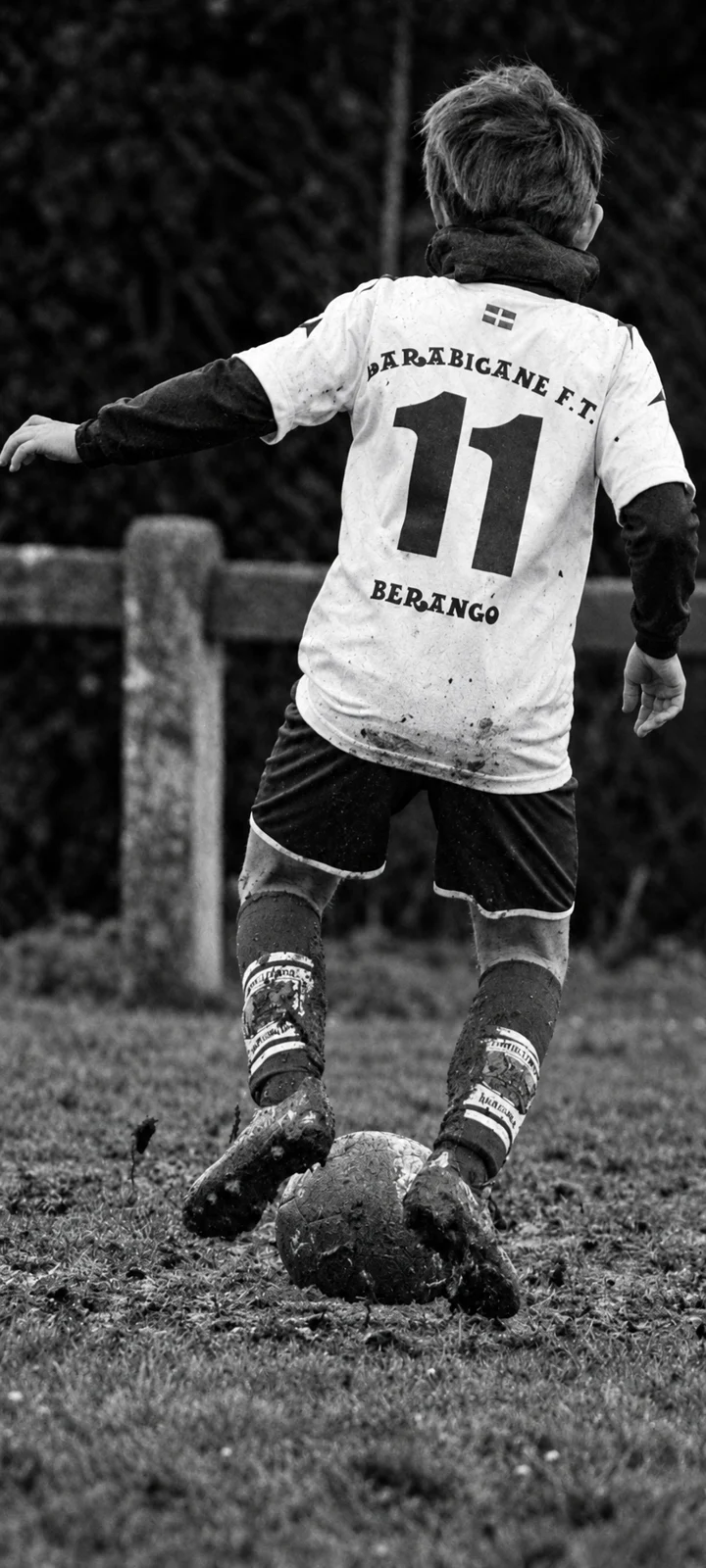
Before soccer reaches a stadium, it passes through a small field. Through cleats that weigh more at the end than at the beginning. Through a ball that sticks in the mud and forces a player to adjust his stride. In one of the photographs accompanying this story, Unai, wearing number eleven, chases the next play. We cannot see his face. We see something anyone who has waited beside a sideline recognizes: the commitment of someone who still plays because the game matters to him.
In the Basque Country, that scene helps explain a passion that cannot fit into a league table alone. Soccer has grand stages, rivalries, and unforgettable nights, but it also has a quieter life built around practices, car rides, and family conversations. Bilbao offers a way into that world. To understand it, start beyond the noise of San Mamés and get closer to the places where the game can still be heard at grass level.
Saturday begins beside the field
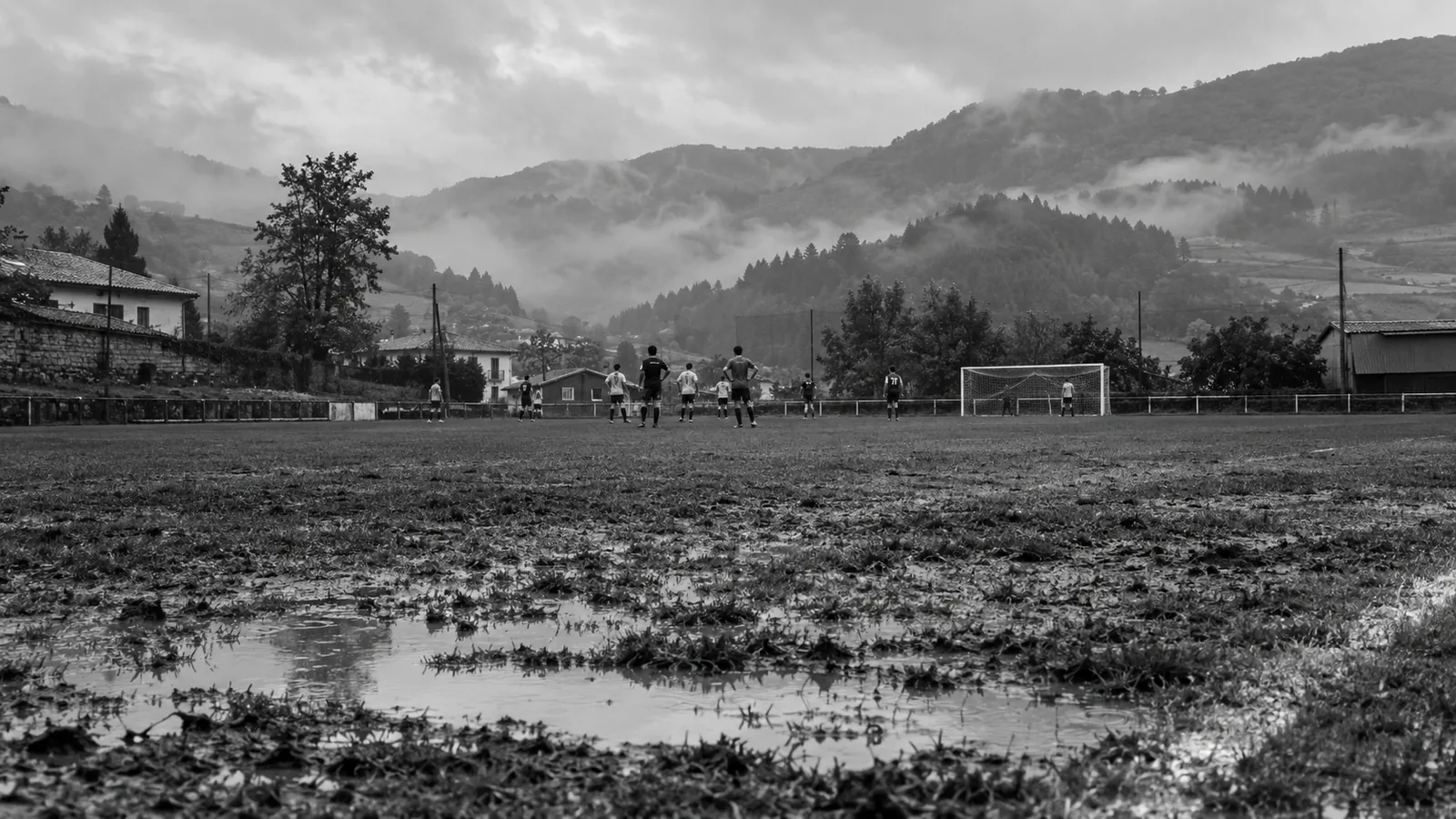
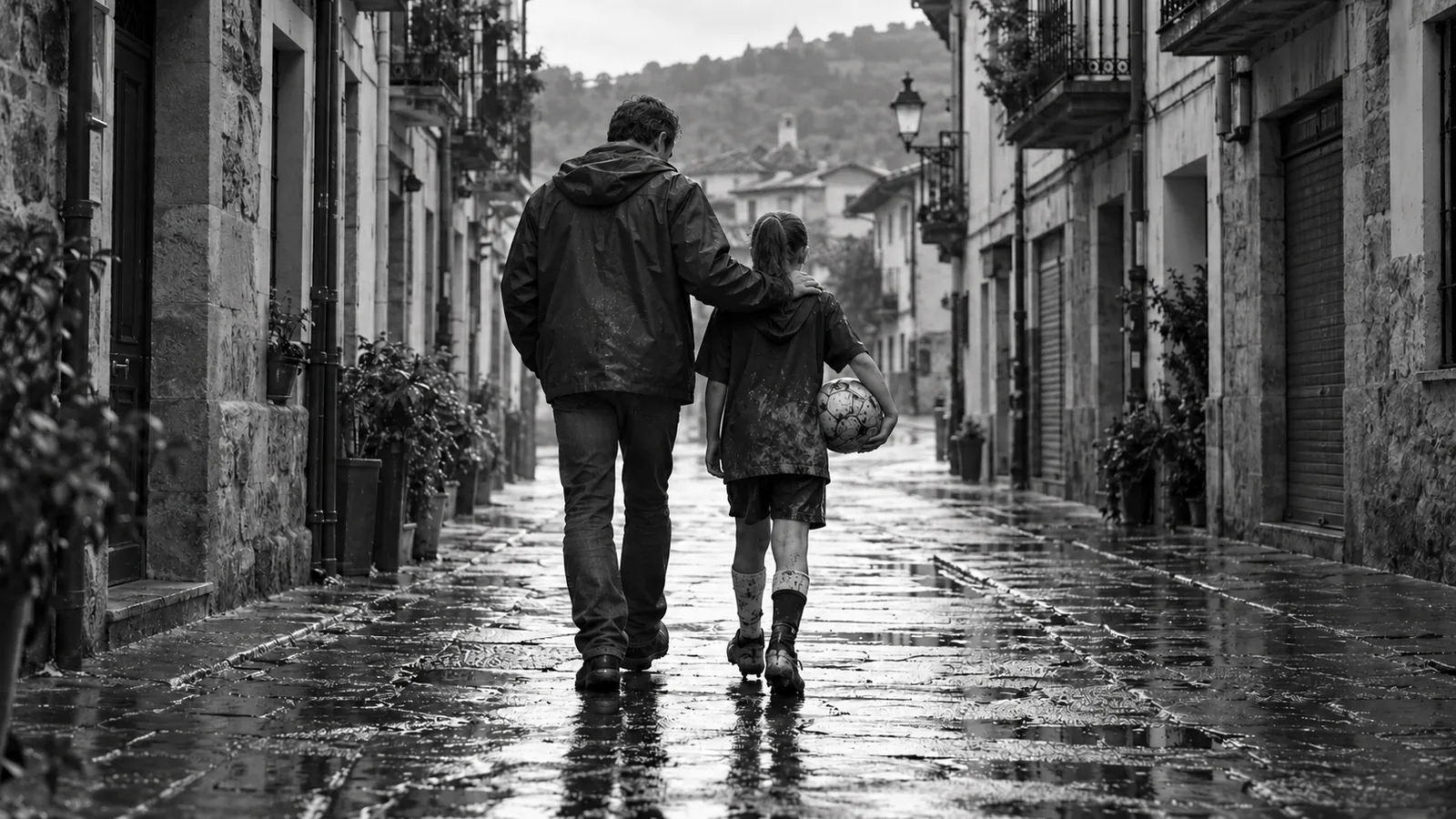
On some mornings, the whole day revolves around a team meeting time. Pack the bag, check the shin guards, find the sweatshirt that has disappeared again. Then comes the drive to the field and that small change in atmosphere: the smell of damp grass, teammates calling out, the sharp sound of a kicked ball. For families, showing up means learning to wait. For children, arriving means returning to a place where each week can offer a fresh beginning.
From outside, it looks like another game. From inside, it may be the day a pass finally works, a free kick is taken with confidence, or a defeat proves hard to accept. Learning soccer also means discovering how to recover from a mistake. The coach gives advice; a teammate offers another option; play continues. Those ordinary gestures provide a quiet education, even when nobody announces it over a loudspeaker.
The mud tells a story too
The photograph of number eleven is powerful because it keeps what many sports images leave out. The stained jersey, the moving legs, the uneven ground. Black and white lets us look at those textures without distraction. We do not need to know the score to understand the effort. Nor do we need to turn the boy into a future professional. The moment matters on its own: he is there, watching the ball, bringing his body and determination to something happening right now.
It would be unfair to romanticize everything. Youth soccer can bring pressure, comparisons, and adults who forget whose game it is. That makes it worth remembering that supporting a child should not become demanding more from the sideline. Children need room to try, fail, and enjoy themselves. The best memory of a season may not be a trophy, but feeling part of a team or remembering that someone was there when things went wrong.
Bilbao and a sense of belonging
When that world of small fields meets Bilbao, the story takes on another scale. On game days, the streets around San Mamés can fill with red and white jerseys and conversations that begin long before kickoff. Some supporters arrive with family; others repeat the walk with friends. A scarf may be a recent purchase or something kept for years. Wearing it can also mean carrying the memory of the person who first taught you how to watch.
Athletic Club holds a distinctive place in this relationship between territory and soccer. Its official philosophy allows players who were born in Euskal Herria or developed at clubs within that territory. It does not require speaking Basque or having a particular surname. That sporting choice gives youth development and local connections a special significance. It also creates debate. Belonging to a club does not mean agreeing with every decision it makes.
A region with many jerseys
The Basque Country extends beyond Bilbao and Athletic. Real Sociedad in Donostia, Deportivo Alavés in Vitoria-Gasteiz, and Eibar have stories of their own. Around them are many other clubs, women’s teams, and fields where the game continues away from the spotlight. Reducing everything to a single jersey would erase much of that landscape. Supporting a team takes different forms, shaped by a city, a family, and the memories each person carries.
People express that support differently too. Some sing throughout the game, some watch quietly, and some discuss every play as though they could fix it. Basque and Spanish are part of the region’s conversations. Humor shares space with criticism; hope with tiredness. That variety makes the experience interesting. There is no single voice that can speak for every fan, and no reason to expect everyone to feel the same.
The city after the whistle
For a visitor to Bilbao, soccer can open up a different way of exploring the city. Before or after a game, a walk along the estuary places the stadium within a community that also goes to work, buys bread, and heads home. A stop for pintxos offers a chance to hear how the match continues in conversation. Arrive with curiosity and respect, without expecting every person to want to explain their club to a stranger.
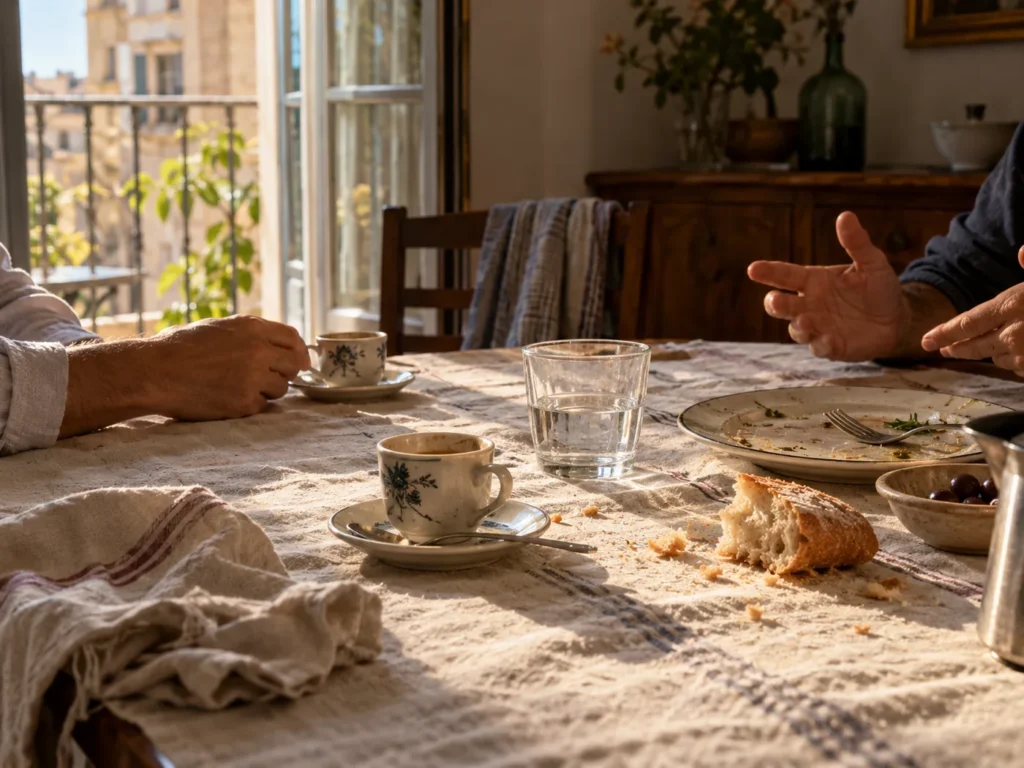
A shared meal extends many afternoons. Someone revisits a missed chance, a decision is debated, and another subject soon appears: work, a trip, somebody who has not come around for a while. Soccer supplies a reason to gather; life supplies everything else. It is a good way to approach everyday Basque life and understand why sharing a table can matter as much as the food being served.
What remains when the game ends
In the end, the boy in the photograph returns to the center of the story. We do not know what happened after that play, and we do not need to invent it. The ball, the mud, and a moving number eleven remain. Perhaps that is why the image says so much: it takes us back to the time before statistics, when soccer was an afternoon spent together and a reason to step onto a field. In Bilbao and across the Basque Country, that part of the game still deserves our attention.